When I first started working as a stillage cage supplier 12 years ago, I’d spend half my on-site visits walking customers through basic questions: how much weight their cages could hold, if they nested properly when empty, and (the one that always made me pause) “Can these things even be locked?” Back then, I’d stumble through a half-answer about padlocks and basic security, but over the years, that question has grown from a throwaway concern to one of the most critical parts of our product conversations—because for warehouses, construction sites, and retail logistics teams, a stillage cage isn’t just metal mesh and a frame. It’s a mobile storage unit that holds everything from expensive industrial valves to seasonal retail inventory, and locking it isn’t just a nice-to-have—it’s a non-negotiable for reducing loss and protecting assets. Stillage Cage
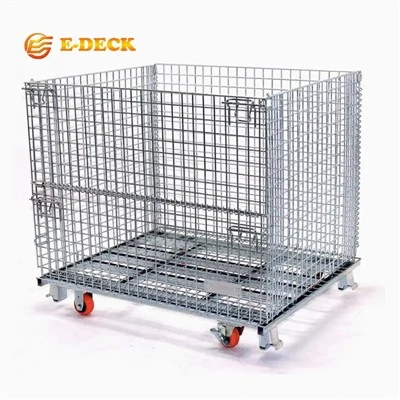
Let’s start with the basics, because there’s a lot of misinformation floating around about stillage cage locking. A lot of people assume these cages are just open, stackable metal frames, so locking them would require some DIY fix—like zip ties or bungee cords that break after two uses. But that’s not true, and honestly, that’s a risk we never recommend to our customers. Stillage cages, at their core, are built to handle heavy loads and constant movement, so any locking mechanism needs to match that durability.
First, let’s talk about why someone would lock a stillage cage in the first place. If you’re a construction yard storing high-dollar tools (drills, air compressors, plumbing parts) on the back of a truck or out in a open lot, leaving a cage unlocked means you’re risking theft—something that costs construction companies an average of $1 billion a year in the U.S. alone, per the National Equipment Register. For retail brands moving seasonal inventory (like holiday decor or outdoor furniture) between distribution centers and stores, unlocked cages mean accidental access, misplaced items, or even tampering that damages products. Even in a busy warehouse, where security cameras might cover most areas, stillage cages left unlocked are vulnerable to misplaced items (imagine a picking team grabbing the wrong part from an open cage and sending it to the wrong job site) or unauthorized personnel accessing restricted materials.
Now, the big question: can stillage cages be locked? The short answer is yes—they’re designed to be, and there are several purpose-built locking solutions that integrate directly with standard stillage cage models. Let’s break down the most common options, because not all locks work for every cage or every use case.
The first, and most popular, lock for standard open-mesh stillage cages is the integrated hasp and staple system. This is a feature we actually add as an optional upgrade to most of our standard cages, and it’s exactly what it sounds like: two metal plates (staples) welded to the vertical bars of two adjacent cage doors, with a hasp that slides over them to accept a padlock. The key here is that these staples and hasp are heavy-gauge steel, welded to the frame so they don’t pull loose even if someone tries to jimmy the door open. For mid-range applications—like warehouse storage, internal transport between departments, or secured trucking—this works perfectly. We often pair this with hardened steel padlocks (not the cheap brass ones you get at the hardware store) because they’re cut-resistant and weatherproof, which matters if cages are sitting outdoors for days at a time.
But what if you’re using a closed stillage cage, or one with a solid back or side panels? Those are common for storing smaller, easily lost items, or for sensitive materials. For those cages, we recommend a cam lock system. Cam locks are small, cylindrical locks that mount directly to the door frame, with a small key that twists to secure the door shut. They’re low-profile, so they don’t get caught on other cages when nesting or stacking, and they’re tamper-resistant enough for indoor use or restricted outdoor areas. One of our construction clients uses these on all their cage doors storing tools, and they told us last year that tool theft at their work sites dropped by 60% after they switched from zip ties to these cam locks.
Wait, but what about people who need higher security? For cages storing extremely high-value items—like electronics components or expensive industrial machinery parts—we offer a reinforced locking bar system. This is a custom upgrade: a heavy-duty steel bar that spans the top of the cage doors, welded to the frame on both ends, with a central lock that secures the bar in place. This isn’t something you’d add after-market, because it requires modifying the cage’s frame to handle the extra force. But for customers moving $10k+ worth of inventory per cage, it’s worth the investment. We’ve also worked with a few aerospace clients who add RFID-enabled locking systems to their stillage cages, so they can track who accesses a cage and when—another layer of security that’s been really useful for regulated industries.
Now, let’s address the common misconceptions that hold people back from using locks on their stillage cages. The first is that adding a lock will make the cage harder to open and slow down operations. That’s a fair concern—warehouses run on speed, and if you have to fumble with a padlock every time you need to pull an item from a cage, that’s a problem. But the good news is that most purpose-built cage locks are designed for quick access. The integrated hasp and staple system, for example, lets you open a padlock in 10 seconds or less, and our cam locks use a key that works for multiple locks across a site, so you don’t have to carry a dozen different keys. We also recommend pairing locks with cage door handles that make it easy to lift and open doors even when they’re locked, so you don’t have to fight with a stubborn door while holding a load.
Another misconception is that locking a stillage cage will damage it, or that the lock will fail under heavy use. I’ve heard this from a lot of new customers who’ve used flimsy after-market locks on cheap cages before, which is why we only work with lock manufacturers who test their products specifically for stillage cage use. Our hasp systems, for example, are load-tested to 2,000 pounds, so even if the cage is stacked with heavy pallets, the lock won’t pull loose. We’ve had customers use the same set of locks for 5+ years, and the only replacements we’ve had to cover are from lost keys, not lock damage.
Then there’s the question of nested cages—you know, when you empty cages and stack them inside each other to save space in the warehouse. Can you lock nested cages? That’s a great question, and the answer depends on the lock type. Our integrated hasp system is designed to work even when cages are nested, because the staples on the top cage’s door line up with the hasp on the bottom cage’s door. We’ve even had customers use a single padlock to secure a stack of nested cages when they’re moving empty cages to a different warehouse, which saves them time and money. The cam locks, on the other hand, are only for individual cages, so if you’re nesting, you’d use the hasp system for security.
I think the biggest takeaway here, after 12 years in this business, is that stillage cages are versatile, but their security features aren’t one-size-fits-all. What works for a small retail warehouse storing holiday decor won’t work for a construction yard storing power tools, and what works for indoor storage won’t work for outdoor trucking. That’s why we never try to sell a one-size-fits-all lock to customers—we walk through their specific use case, how they use their cages, where they store them, and what they’re carrying, then recommend the right locking solution.
Last year, we worked with a mid-sized grocery chain that was losing about $15k a month in produce and small kitchen goods that went missing from stillage cages during delivery between stores. They’d been using no locks, just the cage’s frame to keep doors closed, and between driver error (leaving doors open during stops) and theft by people loitering at delivery bays, they were bleeding money. We installed our integrated hasp and staple system with weatherproof padlocks on all 200 of their delivery cages, and after three months, their loss dropped to under $2k a month. That’s the kind of impact locking stillage cages can have that people don’t always see at first.
Another example: a manufacturing client that stored sensitive chemical components in stillage cages, and needed to make sure only authorized personnel could access them. They were using custom, high-security cam locks with key cards, which meant only their production managers had access to the cages. That not only reduced theft, but also eliminated cross-contamination issues, since no one could accidentally open a cage with a chemical and touch another product.
Now, if you’re reading this and you’re wondering if locking your stillage cages makes sense for your business, here’s what I’d tell you: it’s not just about theft. It’s about efficiency, too. When you have locked cages, you can rest assured that inventory stays where it’s supposed to be, picking teams don’t have to sort through loose items, and you reduce the risk of damage from unauthorized access. And with purpose-built locks that integrate directly with standard stillage cages, it’s not a complicated or expensive upgrade—especially when you weigh it against the cost of lost inventory, which is often much higher than the cost of the locks themselves.
At the end of the day, stillage cages are built to protect what’s inside them, but that protection only works if you use the right tools to keep doors closed. For too long, people thought these open metal frames couldn’t be secured, but that’s just not true. Whether you need basic padlock security for general storage, cam locks for sensitive items, or custom locking bars for high-value assets, there’s a solution that works for every type of stillage cage and every use case.

If you’re looking to upgrade your stillage cage security, or just have more questions about which locking system is right for your operations, we’re here to help. We work with businesses of all sizes, from small local shops to large national logistics companies, and we can walk you through options tailored to your specific needs. Don’t let avoidable loss or inefficiency hold your operations back—reach out to connect for a consultation.
Industrial Cage References
National Equipment Register. (2022). Annual Report on Construction Equipment Theft and Recovery.
Industrial Safety and Storage Association. (2021). Guidelines for Securing Mobile Storage Equipment in Warehouses and Transit.
Material Handling Industry Association. (2020). Best Practices for Stillage Cage Security and Operation.
Hangzhou E-Deck Trading Company Limited
We are one of the most experienced stillage cage manufacturers and suppliers in China, also support customized service. Please feel free to buy bulk durable stillage cage made in China here and get quotation from our factory. Quality products and punctual delivery are available.
Address: Room 610, Building 1, No. 176 Zixia Street, Xihu District, Hangzhou China
E-mail: sales6@e-deck.com.cn
WebSite: https://www.edeckpak.com/
