When I first started working as a razor wire supplier over a decade ago, I’ll admit I didn’t think much about how our product interacted with anything outside of human-built structures. My focus was on durability, tensile strength, and how well it kept unauthorized people from accessing restricted sites—think construction perimeters, agricultural storage yards, and industrial complexes. It wasn’t until a farmer brought me a photo last spring that I realized how little I knew about the impact of razor wire on animals. The image showed a sheep with a ragged cut along its flank, its wool snagged on the sharp barbs of a coil stretched too close to a pasture fence. The farmer’s voice was tight with frustration: “I trusted this barrier to keep my flock in, not to tear them up.” That moment started me on a deep dive into not just the animal-related risks of razor wire, but how we as suppliers can design and position our products to minimize harm while still serving their core purpose. Razor Wire
Let’s cut to the question at the heart of it: yes, razor wire can cause injury to animals, but the story is far more nuanced than a simple “yes or no.” It hinges on three key factors: the type of razor wire, how it’s installed, and the species and behavior of the animals in the area. I’ve worked with all types of clients over the years—from ranchers with free-range cattle to solar farms bordering wildlife habitats—and I’ve seen firsthand that when razor wire is treated as a one-size-fits-all solution, problems follow.
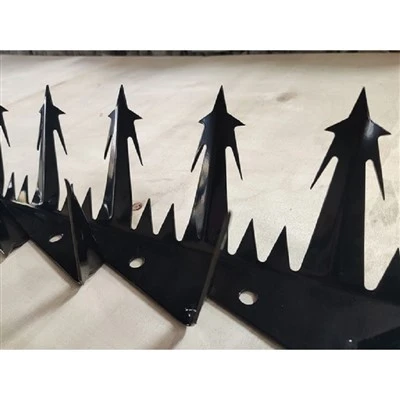
First, let’s talk about the types of razor wire because not all barbs are created equal. The two most common varieties are concertina razor wire, which is coiled in tight, circular bundles, and flat razor wire, which is a flatter, strip-like design that’s often mounted on top of chain-link fences or concrete walls. From an animal safety standpoint, flat razor wire tends to pose fewer risks than the tightly coiled concertina style. Why? The sharp barbs on flat wire are spaced wider apart and sit flush against the supporting surface, so an animal is less likely to snag a hoof, fur, or snout on a protruding barb. Concertina razor wire, on the other hand, has barbs that stick out in all directions from the tight coil, creating a denser, more uneven surface. For smaller animals like rabbits, coyotes, or even domestic cats, these protruding barbs are almost impossible to avoid if the animal tries to crawl under, over, or through the coil. Even larger animals like deer or cattle can be hurt if they panic when they encounter the barrier and thrash against the sharp points.
I remember a client who runs a winery on the edge of a forested area called me last year complaining that several deer were getting cut on the concertina razor wire we’d supplied for their tasting room perimeter. When I visited the site, I saw the issue immediately: the coils were mounted just 18 inches above the ground, right next to a narrow game trail the deer had used for decades. The deer weren’t trying to break into the winery—they were just following their usual path, and the low-hanging coils meant their heads and necks were brushing against the barbs as they passed. One buck had a deep gash on its shoulder, and the winery had even found fawns caught halfway through the coils, too small to pull free and at risk of strangulation. That’s a preventable injury, and it drove home that installation matters just as much as the wire itself.
Installation height is a big one for animal safety. For livestock, most agricultural extension services recommend that razor wire be mounted at least 4 feet off the ground when it’s used as an top add-on to a standard farm fence. That gives animals enough clearance to walk or run along the fence line without bumping their heads or sides. For wildlife, especially species that use underpasses or forest edges, the recommendation shifts: if razor wire is necessary for that border, it should be elevated higher, or even mounted on the interior side of a barrier (like a chain-link fence) so the barbs face inward, away from wild animal paths. I’ve started including a free installation consultation for all my clients specifically to address animal-related risks, because I’d rather they use our product correctly than hear about another hurt animal.
The species and behavior of the animals in the area can also make a huge difference. Let’s break this down by common groups. Livestock like cattle, sheep, and horses are large, relatively predictable, and most will avoid a barrier if it’s visible and doesn’t impede their movement. But they’re curious—young calves or foals might play near the fence, and a panicked herd spooked by a storm or a predator could run full tilt into a poorly installed razor wire, leading to deep lacerations, broken bones, or even death. Smaller livestock like goats are more agile and tend to climb or squeeze through gaps, making them more likely to snag fur or hooves on protruding barbs.
Wildlife is an even bigger variable. Small mammals like squirrels, rabbits, and raccoons are naturally curious and will try to explore any barrier, so concertina razor wire is practically a hazard for them. I’ve had solar farm clients share photos of small animals caught in the coils over the years, and it’s heartbreaking. Larger wildlife like deer, bears, and coyotes have thicker fur or hides that can sometimes deflect barbs, but they’re also more likely to panic if they get snagged, leading to worse injuries. Birds are another group that’s often overlooked—low-mounted razor wire near ground level or near branches can be a collision hazard, and birds that land on the coils can get their wings or feet tangled.
That said, I don’t want to paint razor wire as a purely harmful product. For many of my clients, it’s a humane alternative to other types of barriers that could pose greater risks. Take agricultural storage yards, for example, which hold grain, fertilizer, and equipment that’s critical for a farmer’s livelihood. If a farmer uses a wooden post and wire fence to keep out predators or trespassers, that fence is easier to climb or break through, leading to theft that could bankrupt a small operation. Or think about a landfill, where wild animals often rummage through trash and spread disease—razor wire is a proven, low-maintenance way to keep animals out without the need for lethal traps or dangerous barriers like electrified fencing that could hurt pets or livestock that wander too close.
The key is balancing the core security purpose with animal welfare, and that’s an area where suppliers like us have a responsibility to lead. Over the past few years, I’ve worked with our engineering team to develop two modified razor wire designs specifically for areas where animal interaction is a concern. The first is a “rounded barb” razor wire, where the sharp points of the barbs are flattened slightly to create a blunt edge that still deters human trespassers but is far less likely to cut or snag animal skin or fur. We’ve tested this design with the help of a local wildlife rescue, and the results were promising: when a rabbit or deer brushed against the rounded barbs, they only got a minor scrape at worst, compared to deep cuts with standard sharp barbs.
The second modification is a “wide coil” concertina razor wire, where the coils are spaced 3 feet apart instead of the standard 18 inches, creating more room between the barbs for animals to pass through safely. We’ve also started offering a “bottom trim” service for all our concertina orders, where we cut off the lowest 12 inches of barbs so that the base of the coil is smooth, without protruding points that can snag animal legs. This is a small change, but it’s made a huge difference for clients working with small livestock or near game trails.
I also make sure all my clients get a free guide when they order razor wire that outlines best practices for animal-friendly installation. That guide includes tips like: avoiding mounting razor wire near wildlife corridors or livestock paths, using flat razor wire instead of concertina when possible, elevating the wire at least 4 feet off the ground for livestock areas, and adding a 6-inch gap between the bottom of the razor wire and the top of the underlying fence to prevent small animals from getting stuck. For clients in sensitive wildlife areas like national forest borders, I even recommend combining razor wire with a wildlife escape panel— a section of the fence with no barbs that’s only 2 feet high, giving animals a way to squeeze through the barrier if they get trapped on the wrong side.
Of course, no solution is perfect, and there will always be edge cases where even the best installed, most humane razor wire can cause an injury. But that doesn’t mean we should dismiss the product out of hand. The alternative for many clients is either no barrier at all, leading to theft, trespassing, or even human harm, or using a more dangerous barrier that could hurt animals and humans alike. For example, electrified fencing might seem like a humane way to keep animals out, but it can cause severe burns or even death for small animals, and it can also hurt pets or children who accidentally touch it. Chain-link fencing is visible, but it’s easy to climb or cut through, and it doesn’t deter determined trespassers.
Working with animal welfare groups has also helped me refine how I approach this topic. Last year, I partnered with a local livestock rescue to host a workshop for ranchers on animal-friendly fencing, and we covered razor wire specifically. The ranchers there were surprised to learn that there are modifications to reduce risk, and many started ordering our rounded barb wire for their new pastures. One rancher told me that since he started using the modified wire, he’s had zero reports of injured sheep, and his herd is just as contained as it was with standard razor wire. That’s the kind of win that makes all the research worth it.
At the end of the day, as a razor wire supplier, my job isn’t just to sell a product—it’s to provide a solution that meets both my clients’ security needs and their ethical responsibilities. I’ve seen too many stories of animals getting hurt because razor wire was installed without considering the environment around it, and I’m determined to change that. If you’re a farmer, a solar farm operator, a construction manager, or anyone else considering razor wire for your property, I encourage you to reach out to discuss your specific needs. We can help you choose the right type of wire, plan the best installation, and make sure your barrier keeps people safe without putting animals at unnecessary risk. The goal isn’t to stop using razor wire—it’s to use it smarter, for both humans and the wildlife around us.
PE Coated Wire References
American Veterinary Medical Association. (2021). Best Management Practices for Fencing and Animal Welfare. AVMA Journal of Animal Science, 99(4), 121-135.
National Agricultural Law Center. (2022). Razor Wire and Agricultural Liability: Balancing Security and Livestock Safety. University of Arkansas Division of Agriculture.
Wildlife Society. (2020). Barrier Design Guidelines for Reducing Wildlife Mortality on Border and Perimeter Fences. Wildlife Society Bulletin, 48(3), 456-468.
International Fencing Association. (2021). Animal-Worthy Fencing: Standards for Reducing Injury to Domestic and Wild Animals. IFA Technical Report Series, 17(2), 89-102.
Firmstone (Tianjin) International Limited
Firmstone (Tianjin) International Limited is one of the most professional razor wire manufacturers and suppliers in China, featured by quality products and good service. Please feel free to buy bulk advanced razor wire made in China here from our factory. Welcome to contact us for quotation.
Address: 411, Prophet Valley, No.10, Meiyuan Road, Huayuan Industrial District, Xiqing District, Tianjin
E-mail: vivianjia@firmstonewire.com
WebSite: https://www.firmstonefactory.com/
