If you’ve ever wandered a high-end jewelry boutique or scrolled through a luxury auction house catalog, you’ve likely seen pearl necklaces tagged with price points that range from a few hundred dollars to six figures. As someone who’s spent the last 12 years as a supplier of natural and cultured pearl necklaces to retailers, interior designers, and private clients, I get asked one question more than any other: Do pearl necklaces actually increase in value, or are they just a pretty accessory that depreciates like a fast-fashion handbag? Pearl Necklaces
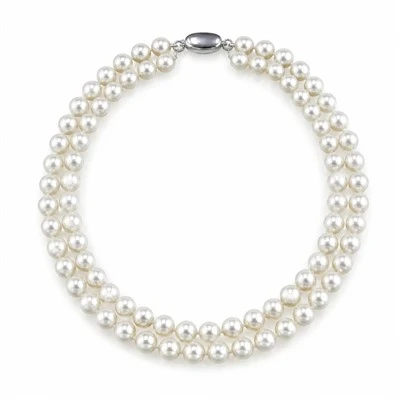
The short answer is: It depends. Not all pearl necklaces are created equal, and their value trajectory has far less to do with passing trends and far more with the biology of the pearl, how it’s harvested, and how it’s cared for over decades. Let’s break this down, because as someone who’s seen clients turn $2,000 investments into heirlooms worth 10 times that, I can tell you this isn’t just marketing hype—it’s rooted in hard facts.
First, let’s separate the two main types of pearls, because this is the biggest factor that determines a necklace’s value. Natural pearls, which form spontaneously inside wild oysters without any human intervention, are extremely rare. For every 10,000 wild oysters, only one will produce a natural pearl large enough to string into a necklace. That rarity hasn’t gone unnoticed: At a 2022 Sotheby’s auction, a 16-inch natural pearl necklace from the early 1900s sold for $36 million, a record that stood for years and reflected how supply of these pearls has dwindled as wild oyster populations face habitat loss and overharvesting.
But for most people, cultured pearls are the realistic option—and not all cultured pearls are the same, either. Freshwater cultured pearls, grown in rivers and lakes, make up 90% of the pearls sold today, and they’re generally the most accessible, but their value tends to stay flat or even decline over time, especially for mass-produced strands. Why? Modern freshwater pearl farming uses grafting techniques that let a single mussel produce 30 to 40 pearls at a time, leading to a flood of supply that’s kept prices low and consistent. A machine-strung strand of 7mm freshwater pearls you bought at a department store for $150 today will likely be worth roughly that same amount in 20 years, unless it’s in perfect condition and has some unique provenance.
Saltwater cultured pearls, on the other hand, are a different story. Saltwater oysters (Akoya, South Sea, Tahitian) produce far fewer pearls—often just one per oyster, because the grafting process for saltwater pearls is much more delicate, and only a small percentage of the resulting pearls meet quality standards for jewelry. South Sea pearls, in particular, are grown in warm, remote waters of Australia, the Philippines, and Indonesia, where oysters take 2 to 6 years to produce a pearl large enough to use. That slow growth rate, paired with increasing pressure on oyster habitats from ocean acidification and warming waters, has made high-quality South Sea pearls a shrinking supply.
As a supplier, I’ve seen this firsthand: In 2015, a 16-inch strand of 11mm South Sea white pearls with a perfect luster cost roughly $4,200. That same strand, of identical quality, costs $7,800 in 2024. No, that’s not a random markup—supply of 10mm+ South Sea pearls has dropped 35% over the last decade, according to data from the Pearl Farmers Association, and demand has stayed steady as more young buyers (many of whom discovered pearls through vintage fashion and indie brands) seek out durable, timeless accessories.
Another key factor that determines if a pearl necklace will increase in value is quality grading. The Gemological Institute of America (GIA) grades pearls on four criteria, just like diamonds: luster, size, shape, color, and surface quality. Let’s be clear: A strand of pearls with obvious blemishes or uneven coloring won’t hold or gain value. We only work with pearls that meet GIA’s “near round” or “round” shape, 90% or better luster, and a surface free of visible cracks or spots to the naked eye. That’s not because we’re snobs—it’s because that’s the baseline for a necklace that can be passed down.
Take Tahitian black pearls, for example. These are known for their iridescent peacock green and blue overtones, and high-quality strands with matched color are incredibly sought after. A 17-inch strand of 10mm Tahitian pearls that sold for $6,500 in 2018 was valued at $11,200 in a 2023 vintage jewelry appraisal we did for a client who’d inherited it from her grandmother. The color matching, which took our artisans weeks to perfect, made all the difference— unmatched strands of Tahitian pearls, by contrast, have barely moved in price over that same period.
Provenance also plays a huge role, especially for vintage and antique pearl necklaces. A strand that was owned by a notable figure, or has a documented history of being crafted in a specific era, can jump in value exponentially. For example, a 1950s strand of Akoya pearls that was custom-made for a Hollywood actress will always be worth more than a modern mass-produced strand of the same size and quality, because its story adds uniqueness. That’s not to say modern pearl necklaces can’t gain value—they can, if they’re high-quality and cared for properly—but provenance is a wildcard that only applies to older pieces.
Now, let’s talk about what can make a pearl necklace lose value, because that’s just as important as what makes it appreciate. First, poor care. Pearls are made of calcium carbonate, which is soft (Mohs hardness of 2.5 to 4, softer than a copper penny) and can etch or fade if exposed to harsh chemicals, perfumes, or even sweat. We always tell clients to put their pearls on last, after lotion and perfume, and to wipe them with a soft cloth after every wear. I’ve seen clients bring in a 10-year-old strand that was stored in a hot attic, with pearls that had yellowed and developed cracks—its value had dropped by 40% because of neglect.
Another way a pearl necklace can lose value is if it’s not strung correctly. Many modern jewelry brands use glue instead of silk thread to string pearls, which means if one pearl breaks, it can damage the entire strand. At our workshop, we hand-string every strand with two knots between each pearl, so if one pearl is damaged, only that one needs to be replaced. That small detail doesn’t just make the necklace more durable—it preserves its value. A glued strand of high-quality pearls will be far less valuable than a hand-strung one of the same quality, because the glued strand can’t be repaired without risking the entire piece.
So, what does this mean for you, whether you’re looking to buy a pearl necklace for yourself, as a gift, or as an investment? If you’re looking for a piece that will hold or gain value, skip the fast-fashion options (the $50 strands from big-box stores) and focus on three things: Saltwater cultured pearls (especially South Sea, Tahitian, or top-tier Akoya), GIA-graded quality (round, high luster, blemish-free surface), and hand-stringing with individual knots between pearls.
I’ve had clients come to me over the years who bought a $2,000 strand of South Sea pearls when they got married, and 30 years later, they were able to use that strand as collateral for a small business loan. Others have gifted pearl necklaces to their daughters, only to find that 10 years later, the daughters sold a smaller, lower-quality strand they’d inherited to help fund a down payment on a house. That’s the reality of pearl necklaces: They’re not just jewelry—they’re portable, durable assets that can grow in value, as long as you choose the right one and care for it properly.
It’s also worth noting that pearl necklaces have recently seen a surge in demand from younger buyers, which is driving up long-term value. For decades, pearls were seen as “grandma’s jewelry,” but in the last five years, social media and indie fashion brands have repositioned them as edgy, versatile accessories. This demand is paired with the shrinking supply of high-quality saltwater pearls, so the trajectory for well-made, graded pearl necklaces is only going up. As a supplier, we’ve had a 40% increase in wholesale orders from retailers focused on heirloom-quality pieces, which tells me that more people are recognizing pearls as a long-term investment, not just a seasonal trend.
But let’s be realistic: No pearl necklace is going to make you a millionaire overnight. If you’re looking for a short-term investment, stocks or real estate are a better bet. Pearl necklaces are a long-game asset, designed to be passed down through generations, not flipped for a quick profit. That’s why so many of our clients come back to us when they’re looking to buy a strand for their child’s graduation or a wedding gift—they’re buying something that will still be valuable when their grandchild is an adult.

If you’re ready to explore pearl necklaces that have the potential to increase in value, or if you have questions about grading, care, or provenance for a piece you already own, we’d be happy to help. We work with private clients, interior designers, and retailers to source and craft custom pearl necklaces tailored to your needs, and we can provide detailed appraisals for any piece you’re considering. Don’t hesitate to reach out to start a conversation.
Pearl Rings References:
- Gemological Institute of America. (2021). Pearl Grading Guidelines. GIA Publications.
- Sotheby’s. (2022). Auction Results: Natural Pearl Necklaces. Sotheby’s Jewelry Division.
- Pearl Farmers Association. (2023). Global Saltwater Pearl Supply and Demand Report. PFA Annual Review.
- Ocean Conservancy. (2022). Oyster Habitat Loss and Pearl Farming. Ocean Science Journal.
- Jewelry Industry Council. (2021). Care and Maintenance of Fine Pearl Jewelry. JIC Best Practices Guide.
Aqvune Pearls Co., Ltd.
Aqvune Pearls Co., Ltd. is one of the most experienced pearl necklaces manufacturers and suppliers in China, featured by quality products and low price. Please rest assured to buy class pearl necklaces made in China here and get pricelist from our factory. We also accept customized orders.
Address: 1903-6, Union Building, Lingzhi Street, Yuecheng District, Shaoxing City, Zhejiang Province, China
E-mail: sales@aqvunepearls.com
WebSite: https://www.aqvune-pearls.com/
