If you’ve ever worked in industries that handle corrosive chemicals—think pharmaceuticals, semiconductor manufacturing, or water treatment—you’ve probably wondered about the small, critical components that keep pumps running without failing. As a PFA wire supplier, this question comes up more often than you might expect: Can PFA wire be used with chemical pumps? The short answer is yes, but there’s a lot more nuance to that than a simple “yes” would suggest. Today, I want to break down why PFA wire matters for chemical pumps, how it works, and what you need to know before specifying it for your next project. PFA Wire
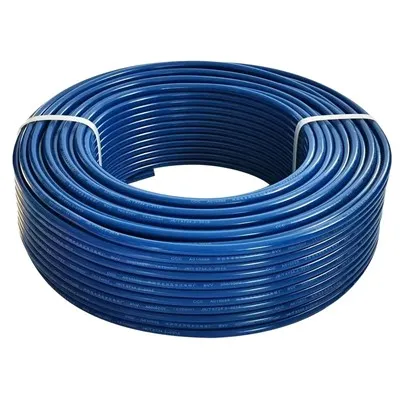
First, let’s get clear on what PFA wire is, because not all fluoropolymer wires are the same. PFA stands for Perfluoroalkoxy, a thermoplastic fluoropolymer that’s often confused with Teflon (which is the DuPont brand name for polytetrafluoroethylene, or PTFE). While both are highly resistant to chemicals, PFA has a key advantage over PTFE: it melts and flows at lower temperatures, making it easier to extrude into thin, consistent wires or coatings without the porosity that can sometimes plague PTFE parts. PFA wire typically consists of a thin copper or stainless steel core, coated in a uniform layer of PFA, designed to insulate electrical connections while standing up to harsh chemical environments.
Chemical pumps, on the other hand, are workhorses that move everything from strong acids like sulfuric acid to aggressive bases like sodium hydroxide, and even volatile solvents. Many chemical pumps rely on small sensors, thermocouples, or heating elements to regulate flow, temperature, or pressure—components that need electrical insulation to function. If that insulation fails, you’re looking at short circuits, sensor inaccuracy, or even pump shutdown, which can lead to costly downtime in industries where every minute of operation matters. That’s where PFA wire steps in, but it’s not a one-size-fits-all solution.
Let’s start with why PFA is uniquely suited for chemical pump environments. First, its chemical resistance is unmatched for most industrial applications. PFA doesn’t react with nearly 99% of known chemicals, including concentrated acids, bases, salts, and organic solvents. Unlike rubber or PVC, which can swell, degrade, or leach harmful compounds when exposed to corrosive materials, PFA remains stable even in continuous contact with chemicals. For example, in semiconductor manufacturing, chemical pumps move hydrofluoric acid and ammonium hydroxide—PFA wire can withstand both at operating temperatures up to 260°C (500°F), which is higher than the typical operating range for most chemical pump sensors. That stability means the insulation won’t break down, keeping electrical connections safe and reliable.
Second, PFA has excellent dielectric strength, which is critical for electrical components in pumps. Dielectric strength measures how well a material insulates electricity, preventing leaks or shorts. PFA has a dielectric strength of around 20 kV/mm, which is higher than PVC or many other common insulating materials. For chemical pumps, which often operate in damp, electrically noisy environments (thanks to the motors and other heavy equipment nearby), that extra insulation is a big deal. It reduces the risk of signal interference in temperature sensors, which are used to ensure the pump doesn’t overheat when moving high-viscosity or exothermic chemicals.
But here’s the catch: PFA wire isn’t compatible with every chemical pump scenario. Let’s talk about the limitations, because that’s where a lot of engineers go wrong when they first reach out. First, while PFA resists most chemicals, it can be degraded by a few highly reactive substances, like elemental fluorine at high temperatures, or molten alkali metals. If your pump is handling those materials, PFA wire isn’t the right choice—you’d need something like a perfluoroelastomer (FFKM) instead. Second, PFA wire’s flexibility: if your pump has tight internal spaces or requires frequent bending (like in submersible chemical pumps, where cables are routed through narrow gaps), PFA can be stiffer than Teflon-coated wire. That doesn’t rule it out, but you’ll need to specify a thinner coating or a smaller core size to improve bend radius without sacrificing insulation.
Another factor is pump type. Chemical pumps come in several designs, and PFA wire works better with some than others. For example, centrifugal chemical pumps, which are common in water treatment and chemical processing, have external sensors and wiring that’s exposed to the pumped fluid. In this case, PFA wire’s external coating protects the inner copper core from splashes, fumes, and occasional direct contact with the chemical being pumped. On the other hand, magnetic drive chemical pumps, which are sealed to prevent leakage, often have internal thermocouples that monitor the fluid temperature. Here, PFA wire is used inside the pump’s sealed housing, where it’s exposed to the process fluid 24/7—its resistance to thermal degradation means it won’t crack or insulate poorly over time, even with daily temperature changes.
I’ve seen this play out firsthand. A few years ago, a client in the pharmaceutical industry reached out to us because their centrifugal chemical pumps for mixing citric acid solutions kept failing after six months. The issue? They were using standard PVC-coated wiring for the pump’s level sensors. Citric acid, while relatively mild, still caused the PVC to swell and crack, leading to shorts. We switched them to our 22 AWG PFA wire, and those pumps have run flawlessly for over four years now. That’s the kind of result that makes our work matter—because a single pump failure in pharma can delay batch production, waste raw materials, and even lead to regulatory issues.
Another example: a semiconductor fab that was using submersible chemical pumps to move ultrapure water with trace acids. Their old wiring, coated in FEP (Fluorinated Ethylene Propylene), would leach trace amounts of fluorocarbon compounds into the water, contaminating the product. FEP is cheaper, but it’s less chemical resistant than PFA. We supplied them with PFA-coated thermocouple wires, and they reported zero contamination issues after the first month. That’s a huge win for an industry where even parts per billion of impurities can ruin a silicon wafer.
Now, let’s address a common misconception: some people think PFA wire is too expensive for chemical pump applications. It’s true that PFA wire costs more upfront than PVC or FEP-coated wire, but the total cost of ownership tells a different story. Chemical pump downtime costs can run thousands of dollars per hour, depending on the industry. PFA wire’s longer lifespan—typically 5 to 10 years in continuous corrosive use, compared to 1 to 2 years for PVC—means you’re replacing wiring far less often, saving on labor and replacement parts. For pumps that handle high-value chemicals, the cost of avoiding contamination or shutdown easily outweighs the initial price difference.
If you’re thinking about using PFA wire with your chemical pumps, there are a few key steps to take to ensure it works for your specific setup. First, verify the chemical compatibility of the process fluid. Our team provides free compatibility testing for all clients—we can test a sample of your fluid with PFA wire to confirm it won’t degrade the coating. Second, consider the pump’s operating temperature and pressure. PFA performs best up to 260°C, but if your pump runs hotter than that, we can recommend a modified PFA formulation that’s rated for higher temperatures. Third, think about the wiring route: if you need a tight bend radius, we can offer thin-wall PFA wire that’s more flexible without sacrificing insulation.
At the end of the day, PFA wire is not just a good fit for many chemical pumps—it’s often the best choice when you need reliability, chemical resistance, and long-term performance. But that doesn’t mean it’s the only choice, which is why it’s important to partner with a supplier who knows the ins and outs of both PFA and chemical pump design. We’re not just here to sell you wire; we’re here to help you pick the right wire for your pumps so you can avoid costly failures.

If you’re currently dealing with pump wiring issues, or you’re planning a new chemical pump installation and want to make sure you’re specifying the right components, we’d love to talk. Don’t hesitate to reach out to our team to discuss your needs, get a compatibility test, or request a custom PFA wire solution tailored to your chemical pump application. Our experts have years of experience working with industries across the board, from pharma to semiconductors to water treatment, and we’re ready to help you find the right solution.
Nylon PVC Wire References
- “Fluoropolymers: Properties and Applications,” Plastics Technology Association, 2022.
- “Chemical Compatibility Guide for Industrial Materials,” Corrosion Resistance Database, National Association of Corrosion Engineers (NACE), 2021.
- “Electrical Insulation for Corrosive Environments,” IEEE Transactions on Industry Applications, Vol. 57, No. 3, 2020.
- “PFA Wire Extrusion and Performance Standards,” International Wire and Cable Division, Underwriters Laboratories (UL), 2019.
3F Electronics Industry Corp., Ltd.
3F Electronics Industry Corp., Ltd. is well-known as one of the leading pfa wire manufacturers and suppliers in China. Please feel free to buy or wholesale high quality pfa wire in stock here from our factory. Contact us for quotation.
Address: No.6 Zhenxing Road, Liyu River Industrial Zone, Loucun Community, Xinhu Street, Guang Ming New District, 518107 Shen Zhen, Guang Dong Province, China.
E-mail: Allen@3f-electronics.com
WebSite: https://www.3f-electronics.com/
