Hey there, Neodymium Magnet
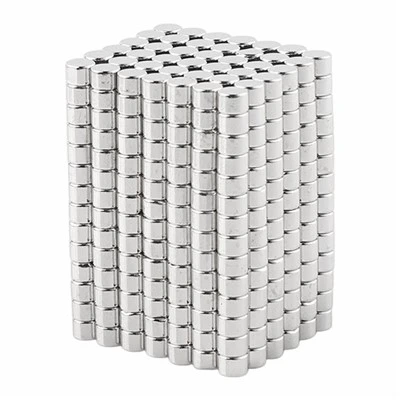
If you’ve ever stepped foot in a Neodymium Magnet supply room, tinkered with a motor prototype, or watched a small permanent magnet lift a stack of steel plates like it’s nothing, you’ve probably had that split-second moment of panic: wait, did I just leave that neodymium magnet out on the workbench? I’ve been working with neodymium magnets for 12 years, and that exact moment still hits me sometimes. You see, raw neodymium is beautiful – bright, silvery, sharp as a blade, and stupidly strong for its size. But it’s also a chemical nightmare. Expose it to even a little humidity, a splash of coolant, or the salt air at a marine job site, and it starts to rust, corrode, and flake apart. That’s where the best coating for neodymium magnets comes in – and if you ask 10 different engineers, you’ll get 10 different answers. Let me walk you through what I’ve learned, because after thousands of sales, customer calls, and testing sessions, there’s no one-size-fits-all, but there is a way to pick what works for your project.
First, let’s get one thing straight: raw neodymium magnets will not survive in real life. I’ve had a customer send me a photo once of a batch of tiny neodymium discs he left in his garage for three weeks, right next to a water heater drip pan. They looked like little rusty rocks, useless for his medical device. No coating, no chance. The core reason neodymium corroded is that its main components – neodymium, iron, and boron (hence NdFeB) – are highly reactive. Iron loves oxygen and water; when those two meet the iron in your magnet, you get rust. That rust expands, too – like a tiny, slow-motion explosion under whatever surface is on your magnet. If your magnet has a chipped or cracked coating, that rust will push the coating off, leaving even more of the magnet exposed. So a good coating does two main jobs: it blocks moisture and corrosive substances from touching the neodymium, and it doesn’t chip or peel when you’re handling, machining, or assembling the magnet.
Now, let’s go through the coatings we use most often, and which jobs they’re made for. I’ve tested every single one of these in our in-house salt spray chamber – that thing blasts magnets with 5% salt water for hours, simulating marine environments, industrial settings, even outdoor use – so I’m not just regurgitating manufacturer data; I’ve seen them fail and survive in real conditions.
First up: Epoxy coating. This is probably the most common coating we sell, and for good reason. Epoxy is cheap, easy to apply, and super versatile. We use both powder-coated epoxy and liquid epoxy, depending on the part. For small neodymium magnets like the ones used in phone speakers or hobby motors, we often do a thin liquid epoxy dip – dunk the magnet, spin off the excess, bake it, and it’s done. For larger parts, like magnets in industrial lifts or wind turbine generators, powder epoxy is thicker, harder, and more scratch-resistant. I once had a customer who was making magnetic separators for a food processing plant – they needed magnets that could stand up to regular washing with soap and water, and epoxy worked perfectly. The epoxy kept the moisture out, and it’s non-toxic, so it didn’t contaminate the food products. But here’s the catch: epoxy is porous if it’s too thin. We had a batch a few years back where a new applicator didn’t bake the epoxy long enough, and 10% of the magnets failed salt spray testing in 48 hours instead of the standard 72. That’s the thing with epoxy – it’s only as good as the application. If there’s a pinhole or a thin spot, corrosion will start there, fast. Also, if you’re machining your magnet after coating, epoxy chips easy. We had a customer once who bought epoxy-coated magnets and tried to machine them to a tighter tolerance; half the coating chipped off, and they had to send them all back to us for re-coating. So if you need to machine your magnet, epoxy might not be the best bet.
Next: Nickel-Copper-Nickel (NiCuNi) coating. This is the workhorse of the permanent magnet industry, the one most standard neodymium magnets come with if you don’t specify a different coating. NiCuNi is a three-layer plating: first a thin layer of nickel, then a thicker layer of copper, then another layer of nickel. It’s shiny, it looks professional, and it’s way more corrosion-resistant than epoxy for most indoor, low-humidity jobs. We use NiCuNi for magnets going into consumer electronics, office equipment, and indoor motors – places where they won’t be exposed to harsh elements. I’ve seen NiCuNi magnets sit in a warehouse for 10 years and still look almost new. But here’s the downside: copper is porous, and if the nickel layers are applied too thin, moisture can get through the top nickel, into the copper, and then straight to the neodymium. Also, NiCuNi is not great for high-temperature applications. If your magnet is going into a motor that runs at 150°C or higher, the layers can separate, and the copper can corrode inside, causing the whole coating to bubble off. We also don’t recommend NiCuNi for any outdoor or marine use, even if it’s “light” outdoor – salt air and UV light will eat through it eventually. A customer who made boat fenders with embedded neodymium found that out the hard way; after a year of salt water splashes, half the NiCuNi coatings had flaked off, and the magnets were rusted.
Then we have Zinc coating. Zinc is another plating option, mostly used for outdoor applications where corrosion resistance is important but you don’t need the shine of nickel. Zinc acts like a sacrificial anode – if there’s a scratch in the coating, the zinc will corrode before the neodymium does. That’s a big plus for parts that get chipped or scratched during assembly. We use zinc coating for things like magnetic hooks for garage doors, outdoor toy magnets, and agricultural equipment parts. The downside is that zinc is not as corrosion-resistant as NiCuNi in extreme conditions. If you blast a zinc-coated magnet with salt spray, it might last 200 hours instead of 72 like epoxy or NiCuNi, but it will eventually corrode. Also, zinc can react with some adhesives – we had a customer once who used a strong industrial adhesive to mount zinc-coated magnets to steel, and after a few months, the zinc started bubbling because of a chemical reaction between the adhesive and the zinc. So you have to pick the right adhesive if you go with zinc.
Now, the one that’s been growing in popularity a lot lately: Parylene coating. If you’re working on a medical device, aerospace part, or something that needs extreme corrosion resistance, Parylene is the way to go. Parylene is a polymer that’s applied through a vapor deposition process – it’s not sprayed or dipped; it’s a gas that coats every single surface, even tiny gaps and holes, with a uniform, pinhole-thick layer. It’s super thin (like 1 to 50 microns, depending on how you apply it), so it doesn’t add much to the dimensions of your magnet – perfect for parts that need tight tolerances. I’ve seen Parylene-coated magnets pass 1000 hours of salt spray testing, which is way more than epoxy or NiCuNi. They’ve been tested in implantable medical devices, where biocompatibility is key, and Parylene is non-toxic, so it doesn’t leach into the body. The only downsides to Parylene? It’s more expensive than the other coatings, and it’s not as scratch-resistant. If you drop a Parylene-coated magnet, it might scratch, and while the vapor deposition covers gaps, if there’s a major chip in the magnet itself, the Parylene won’t hold up as well as epoxy. Also, it’s not great for high temperatures above 120°C, so if you’re in a high-heat environment, you might want to look elsewhere.
Wait, there’s also a newer coating called Titanium Nitride (TiN) coating, mostly used for industrial applications where hardness and wear resistance are important. TiN is super hard, like a ceramic, so it stands up to abrasion really well. We use TiN for magnets in pumps, gears, and parts that rub against other materials a lot. The downside is that TiN is brittle, so if you drop the magnet or subject it to impact, it will crack. And it’s more expensive than NiCuNi, so it’s only worth it if you need that extra hardness.
So how do you pick the best coating for your neodymium magnet? Let’s break it down by use case, because that’s what really matters. If your magnet is for a consumer product – a phone, a speaker, a office whiteboard – NiCuNi is almost always the best choice. It’s cheap, looks good, and works perfectly in low-humidity indoor environments. If your part is going into a motor, a separator, or something that might get washed or exposed to moisture, epoxy is probably your best bet. It’s tough, non-porous when applied correctly, and cheap enough that you can replace parts if there’s a failure. If you need it for outdoor use – like a gate latch, a boat part, or an agricultural tool – go with either zinc or Parylene, depending on your budget and how harsh the environment is. For medical or aerospace parts, Parylene is non-negotiable, because of its biocompatibility and extreme corrosion resistance. If you need wear resistance for industrial parts, TiN is the way to go.
I’ve seen so many customers make the wrong choice, and it’s always because they picked based on cost alone instead of use case. A customer once bought a batch of cheap epoxy-coated magnets for a marine project, thinking epoxy was cheaper than NiCuNi. Six months later, he was calling me, asking if I could replace all the rusted magnets – turns out, the epoxy was porous, and the salt water ate right through it. Another customer bought NiCuNi for a high-temperature motor, and within a year, the coating bubbled off, because NiCuNi doesn’t hold up above 150°C. The lesson here: don’t just look at the upfront cost. Think about where the magnet will live, what it will touch, and how long it needs to last.
Also, one thing people forget: coating can affect the magnetic performance, even if it’s just a little. For example, thicker coatings like powder epoxy can add a small gap between the magnet and whatever it’s mounted to, which reduces the pull force a tiny bit. If you need maximum pull force, go for a thinner coating like liquid epoxy or Parylene. And if you need a custom size or coating, that’s totally doable – we do custom coatings all the time, so if you have a specific requirement, just let us know.
At the end of the day, the best coating for neodymium magnets isn’t a one-size-fits-all answer. It’s about matching the coating to your project’s needs. If you’re not sure, that’s totally fine – call us up, tell us what your magnet is going to be used for, what environment it will be in, and how long you need it to last. We’ve been doing this for 12 years, and we can help you pick the right coating, or even develop a custom coating if none of the standard ones work. We work with small hobbyists and big Fortune 500 companies alike, so no project is too small or too big.

Don’t let a bad coating ruin your project. Neodymium magnets are powerful, reliable, and amazing when they’re protected the right way. All it takes is picking the right coating, and they’ll last for decades, not just months. If you’re working on a new project, or you need to replace some failed magnets, reach out – we can walk you through every step, from choosing the coating to getting the right size magnet for your needs. We’re not just a supplier; we’re here to help you get the job done right.
Magnetic Sticks References:
- ASM International. (2008). Corrosion of Permanent Magnets. Materials Park, OH: ASM International.
- Buschow, K. H. J. (1998). Permanent Magnets: Materials, Properties, and Applications. Journal of Magnetism and Magnetic Materials, 182, 1-15.
- NASA. (2012). Corrosion Control for Aerospace Applications. NASA Technical Report.
- Takahashi, T., et al. (2005). Corrosion Resistance of Coated NdFeB Magnets. IEEE Transactions on Magnetics, 41(10), 3828-3830.
- European Committee for Standardization. (2010). Magnetic Materials – Corrosion Testing of Permanent Magnets. EN 12159:2010.
Xiamen Zhaobao Magnet Co., Ltd.
With abundant experience, we are one of the most professional neodymium magnet manufacturers and suppliers in China. Please feel free to wholesale advanced neodymium magnet made in China here from our factory. All customized products are with high quality and competitive price.
Address: Room 201, No.15, Longxinli, Siming District, Xiamen, Fujian, China
E-mail: zb16@magnets-world.com
WebSite: https://www.zbmagnet-king.com/
