As a supplier specializing in pneumatic solenoid valves, I get dozens of questions every week from engineers, maintenance technicians, and facility managers— but one of the most common, and most critical, is: “What temperature range does the solenoid coil of a pneumatic solenoid valve actually handle?” It’s not a trivial question. Too hot, and the coil’s insulation wears out prematurely; too cold, and the internal parts can contract, leading to sluggish operation or even failure. Over the 12 years I’ve worked in this industry, I’ve seen far too many production lines grind to a halt because someone installed a valve with a coil that was never designed for their environment. That’s why I’m breaking this down clearly, no confusing jargon, so you can get the right valve for your application. Pneumatic Solenoid Valve
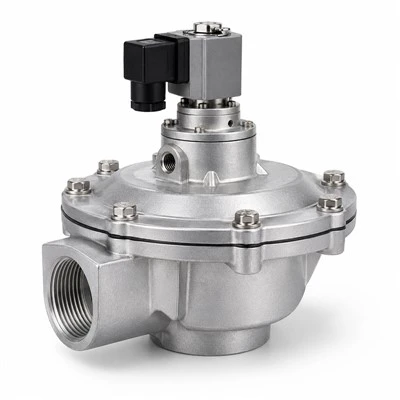
First, let’s start with the basics: why does temperature matter so much for a solenoid coil? A pneumatic solenoid valve’s coil is essentially an electromagnet— wrapped in thin copper wire, sealed in a plastic or metal housing, and connected to your power supply. When electricity runs through that copper wire, it generates the magnetic field that pulls the valve’s internal armature open or closed, directing compressed air through your system. But that same electricity also creates heat. Even at normal operating conditions, the coil will run hotter than the surrounding environment. On top of that, if your system is located outdoors in a cold climate, or in a factory near a furnace or drying oven, the ambient temperature adds another layer of stress. Get that balance wrong, and you’re looking at unexpected downtime, which can cost thousands of dollars an hour for a manufacturing plant.
Now, to the core question: what’s the standard temperature range for solenoid coils in most pneumatic valves? Most of the off-the-shelf valves we supply for general industrial use have a rated coil temperature range of -20°C to 60°C (or -4°F to 140°F). That range works for most indoor applications: a warehouse floor, a small parts assembly line, a standard packaging machine. But here’s the catch: that’s the ambient temperature rating. The coil’s internal temperature can be 10°C to 20°C higher than the ambient, depending on how long the valve is cycling, the voltage you’re using, and the air flow around the valve. For example, if your factory floor is a steady 40°C (104°F), the coil itself might hit 60°C (140°F)— right at the upper limit of that standard rating. Run it a little hotter, and you risk the insulation on the copper wire breaking down over time.
What happens if you go above that upper limit? Let’s say you have a valve mounted near a kiln in a metal stamping shop, where the ambient temperature is 70°C (158°F). A standard coil will overheat within hours. The insulation on the copper wire, usually a thin polymer or enamel coating, starts to degrade when exposed to sustained high heat. As that insulation breaks down, the copper wires can touch each other inside the coil, causing a short circuit. A short circuit will either blow your fuse immediately, or in some cases, make the coil run so hot that it melts the plastic housing. We’ve had customers tell us their valves caught fire on the production floor because they didn’t account for the heat from their nearby process equipment. That’s not a risk worth taking.
On the cold end, it’s less talked about, but equally problematic. Standard coils are designed for temperatures down to -20°C (-4°F). If you’re operating outdoors in a northern climate, like Minnesota or Canada, or in a refrigerated warehouse where the temperature drops to -30°C (-22°F), a standard coil won’t work. The copper wire inside the coil contracts in cold temperatures, and the plastic or rubber seals on the coil can become brittle. This can lead to two issues: first, the magnetic field from the coil becomes weaker, so the armature doesn’t move fast enough, leading to slow valve actuation. Second, brittle seals can crack, letting moisture get inside the coil, which causes corrosion and electrical shorts. We had a customer in Alberta a few years ago who installed standard valves on an outdoor packaging line, and after a week of -25°C weather, half the valves wouldn’t actuate at all— they had to rush a shipment of cold-rated coils to keep their shipping line running.
That’s why it’s important to know that temperature ranges aren’t one-size-fits-all. We offer different coil ratings for different applications, outside the standard -20°C to 60°C range. For high-temperature applications, like food processing ovens, glass manufacturing lines, or foundries, we supply coils rated up to 85°C (185°F) ambient temperature— and some heavy-duty industrial coils can handle up to 120°C (248°F) for extreme environments. These coils use a higher-grade insulation, like polyimide or silicone enamel, that can resist heat better, and their housings are made of aluminum instead of standard plastic, which dissipates heat faster. For cold environments, we have coils rated down to -40°C (-40°F), with thicker seals and copper wire that’s treated to resist brittleness, so they work reliably even in freezing temperatures.
Another factor that affects the coil’s temperature is its duty cycle. Duty cycle is just a fancy way of saying how often the valve is turning on and off. A valve that cycles 100% of the time (meaning it’s on constantly, or switching every second) will run much hotter than a valve that only cycles 10% of the time, like a gate valve that only opens a few times a day. If you’re running a high-duty cycle application, you need to derate your coil’s temperature. For example, a coil rated for 60°C at 50% duty cycle will only handle 50°C at 100% duty cycle, because the extra cycling generates more heat that can’t dissipate fast enough. We always advise customers to share their duty cycle with us, so we can recommend the right coil for their setup— that’s the kind of personalized support you don’t get from a generic supplier.
Wait, let’s also address a common mistake people make: confusing the coil’s temperature with the valve’s body temperature. The valve’s metal body is exposed to compressed air, so it might run a little hotter than the ambient, but the coil is a separate component, sealed to protect the electrical parts. That’s why it’s important to look at the coil’s spec, not just the valve’s body spec. Some cheaper valve manufacturers will list a wide body temperature range, but their coil is only rated for the standard range, which means the actual operating limit is lower. As someone who’s tested hundreds of valves over the years, I can tell you that not all coils are created equal. We test every coil we supply in both temperature chambers and in real-world applications, to make sure they meet their rated range— no cutting corners.
Another question we get: what about power supply? Does running a higher voltage affect the coil’s temperature? The short answer is yes, but not in the way you might think. A solenoid coil is designed for a specific voltage— 12V DC, 24V DC, 110V AC, 220V AC, etc. If you run a coil at a voltage higher than its rating, the current going through the copper wire increases, which generates more heat. Even a 10% overvoltage can make the coil run 15°C hotter than normal, which can push it past its upper limit. Conversely, undervolting the coil makes the magnetic field weaker, so the valve might not actuate fully, which can cause the coil to work harder, generating more heat as well. That’s why it’s critical to match your power supply exactly to your coil’s rating. We include detailed voltage and temperature specs with every valve, so you don’t have to guess.
Let’s talk about real-world examples to make this concrete. Last quarter, a customer in the plastics industry contacted us, complaining that their valves were failing every few months. They were using standard -20°C to 60°C coils, installed on injection molding machines that run at 70°C ambient temperature, with a 100% duty cycle. Our technical team suggested switching to our high-temperature 85°C coils, and adding small heat sinks to the coil housings to help dissipate the extra heat. Since they made that change six months ago, they haven’t had a single coil failure. That’s the difference between knowing the right temperature range and adapting it to your specific application.
Another example: a food processing plant with a freezer room that uses pneumatic valves to regulate the flow of coolant. They were using standard coils, and in winter, when the freezer temperature dropped to -30°C, the valves would stick open or closed. We recommended our cold-rated -40°C coils, and after installation, the operation became smooth and reliable, even during the coldest months. The cost of switching coils was a fraction of the downtime they were experiencing— for a food plant, where any delay can lead to spoiled product, that’s a no-brainer.
So, to wrap this up, let’s recap what you need to know about pneumatic solenoid valve coil temperature ranges:
First, the standard off-the-shelf coil is rated for -20°C to 60°C ambient, with internal coil temperatures up to 70°C at normal operating conditions. This works for most general industrial applications with moderate temperatures and low to medium duty cycles.
Second, if you’re working in high-heat environments (above 60°C ambient), look for coils rated for 85°C or higher, with heat-resistant insulation and metal housings. For cold environments (below -20°C), use coils rated for -40°C, with cold-treated seals and copper wire.
Third, always account for duty cycle, power supply, and additional heat sources (like nearby equipment) when selecting your coil— don’t just go by the ambient temperature of your space.
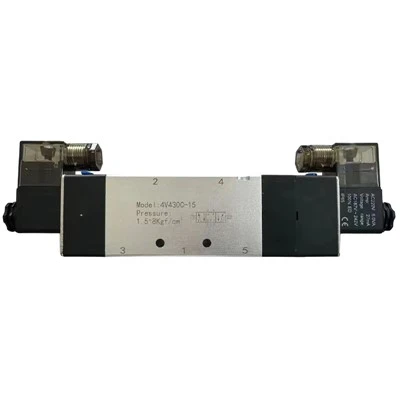
If you’re not sure what temperature range you need, or you’re looking to replace failing coils on your pneumatic valves, don’t guess. We have a team of technical experts who can walk you through your application, share real test data from our products, and help you pick the right coil to keep your system running reliably. Whether you’re managing a small assembly line or a large manufacturing facility, having the right coil temperature rating is the easiest way to avoid unexpected downtime and extend the life of your valves. Contact our team today to discuss your requirements and find the perfect solenoid coil for your pneumatic valve system.
Hydraulic Shock Absorber References
- Pneumatic solenoid valve coil performance standards: International Organization for Standardization (ISO) 14841:2018, Pneumatic fluid power — Valves.
- Thermal management for solenoid coils: National Electrical Manufacturers Association (NEMA) Standards Publication No. ICS 2-2019, Control Devices.
- Industrial pneumatic system reliability: Compressed Air and Gas Institute (CAGI) Technical Bulletin 103, Pneumatic Component Selection for Extreme Temperatures.
- Solenoid coil failure analysis: IEEE Transactions on Industry Applications, Volume 56, Issue 3, May-June 2020, Thermal Aging of Low-Voltage Solenoid Coils.
Zhejiang Yangtian Pneumatic Technology Co., Ltd.
With abundant experience, we are one of the most professional pneumatic solenoid valve manufacturers and suppliers in China. Welcome to wholesale durable pneumatic solenoid valve in stock here and get quotation from our factory. We also accept customized orders.
Address: Xiangdongxiaohua Village, Liushi Town, Yueqing City, Wenjiang District, Zhejiang Province
E-mail: 18968885881@163.com
WebSite: https://www.ytpneumatic.com/
