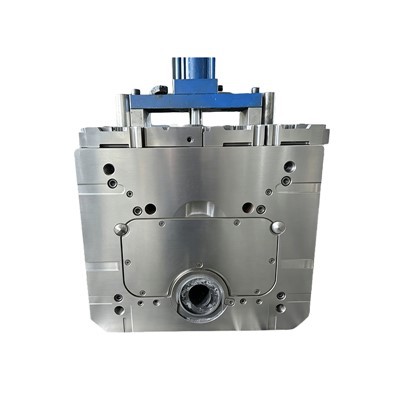
If you’ve ever held a consistently smooth, lightweight automotive brake component, a precise electronics housing, or a tough kitchenware part, chances are it was made with die casting—and that die casting mold that shaped it is the unsung hero of the process. As a die casting mold supplier with nearly two decades of working directly with industrial manufacturers across automotive, aerospace, and consumer goods, I’ve seen first-hand how a well-designed mold doesn’t just produce good parts—it cuts costs, eliminates production delays, and prevents the kinds of quality issues that sink product launches. Too many shops treat mold design like a one-size-fits-afterthought, but in reality, it’s the foundation of every successful die casting run. Let’s break down what goes into designing molds for industrial products, the mistakes we see all too often, and how small, intentional design choices make all the difference. Die Casting Mold
First, you have to start with the part itself, not the mold. I know it sounds backwards, but a mold is only as good as the component it’s meant to produce. I worked with a small automotive parts maker a few years back that came to us with a blueprint for a transmission housing, rushed to get to production, and hadn’t considered how thick the part’s internal ribs were. Their original design had ribs tapering to just 1.2 millimeters, which is way too thin for die casting aluminum—molten metal can’t flow that evenly, so they got a part full of cold shuts and porosity. We walked them through a quick DFM (Design for Manufacturing) review, and adjusted the ribs to 2.5 millimeters with a gradual taper, which still met their performance specs but was perfectly moldable. That’s the first step for any industrial product: collaborate early with your mold design team, not after the blueprint is final. For industrial parts, especially high-stress ones like engine brackets or medical device housings, material choice is non-negotiable here. We work with alloys ranging from aluminum A380, the workhorse for most general industrial parts, to zinc for small, tight-tolerance electronics, and even high-strength magnesium for aerospace applications. Each alloy has different viscosity, shrink rates, and cooling needs—get that wrong, and even the best mold design will fail.
Next, core and cavity design, the heart of the mold. The core is the part that makes the internal features of your component, and the cavity shapes the exterior—get either wrong, and you’ll have parts that don’t fit, or cycle times that take twice as long. For industrial products, you can’t just build a block of steel with holes cut in it. We use P20 or H13 tool steel for most molds, because H13 withstands the repeated high temperatures and pressures of die casting runs way better than lower-grade steels—critical for production volumes that might run 100,000 or more parts without replacement. The core and cavity have to account for shrinkage too. Aluminum, for example, shrinks about 6-8% as it cools, so we build in a permanent shrink factor into the mold dimensions. That’s not a one-size number either—shrinkage varies based on part thickness, alloy, and cooling rate, so our engineers calculate it for every individual part. Another big rule for core and cavity design: draft angles. Even a perfectly smooth part will stick to the mold if there’s no draft. For most industrial aluminum parts, we use a 1.5 to 2 degree draft per side. If you try to get away with less, you’ll end up with parts that get stuck, require manual trimming, or even break during ejection. I’ve had customers ask for zero draft on a cosmetic surface, but we always push back—even with polished mold surfaces, tiny amounts of draft are non-negotiable for consistent ejection, and we can build the draft to be almost invisible if that’s a concern.
Then there’s gating and runner systems, which are how molten metal flows into the mold. This is the area where 90% of mold design mistakes happen, in my experience. A bad gating system leads to cold shuts, porosity, trapped air, and even part distortion. The goal here is to get molten metal into every nook and cranny of the core and cavity fast, without causing turbulence. Turbulence is a big enemy—when metal splashes instead of flowing smoothly, it traps air and oxidizes, leading to weak parts. For small, high-tolerance parts like electronics connectors, we use a fan gate that spreads metal evenly across the cavity. For larger, thicker parts like engine mounts, we use a sprue runner system with multiple gates that feed metal into thick sections first, so they cool evenly without porosity. The gate size is critical too—too small, and metal cools before it fills the mold; too large, and you waste material and have more trimming work to do. We test gate sizes using flow simulation software every time now, not just guesswork. A few years back, we had a customer making a 5-kilogram aluminum bracket that kept getting porosity in the thick central section. We tried 12 different gate sizes manually, before switching to flow simulation that showed we needed two additional small gates on the sides of the part, not just one at the base. That cut porosity rates from 18% to less than 1% overnight.
Cooling systems are another make-or-break detail that’s often overlooked. Industrial die casting molds go through hundreds of cycles a day, and uneven cooling leads to part distortion, cycle time delays, and mold wear. If one section of the mold is cooling faster than another, the metal will shrink unevenly, warping the part. That’s why we design conformal cooling channels, not just straight holes drilled through the mold. Straight holes are cheap and easy to make, but they only cool areas directly along the hole, leaving corners and thick sections much hotter. Conformal channels follow the exact shape of the core and cavity, so every part of the mold cools at the same rate. For example, a thin rib on a part might have a channel that wraps around it, while a thick central boss has a wider channel to pull heat away faster. This doesn’t just improve part quality—it cuts cycle times by 20-30% too, because the mold doesn’t have to sit as long between shots. We worked with a medical device client last year that was running 30-second cycles on a surgical instrument housing with straight cooling. We redesigned the cooling with conformal channels, and they dropped the cycle time to 18 seconds, which added up to thousands of extra parts per week with no loss in quality.
Ejection and venting round out the key design elements that no one talks about enough. Ejection pins have to be placed exactly where a part won’t get damaged when it’s pushed out. If you put a pin on a thin wall, it will leave a mark or even crack the part. We map ejection pin locations based on the part’s strength, placing them on thick bosses or structural ribs, never on cosmetic or thin features. For parts with complex undercuts, we use side actions or lifters that move away as the mold opens, but those add complexity and wear, so we only use them when absolutely necessary. Venting is just as important as ejection—any air trapped in the mold as metal flows in will create voids or cold shuts. We add vent grooves, usually 0.02 to 0.05 millimeters deep, along the parting lines of the mold, and sometimes vent pins in hard-to-reach corners. Without proper venting, even the best flow and cooling system won’t work. I once had a customer complain that their new mold was producing 20% scrap, and we traced it to a tiny air pocket in a corner that had no vent. Adding a 2-millimeter vent groove fixed the problem instantly.
Now, let’s talk about real-world mistakes we see all the time, because even experienced teams slip up. The first is overcomplicating the mold. We had a customer with a small electrical connector that had four different sides needing features, so they designed a mold with four separate side actions. It worked, but it was expensive, had a 40-second cycle time, and broke down every few weeks. We redesigned it with a simpler 2-part core and cavity mold that used undercuts in the cavity instead of side actions, and the cycle time dropped to 15 seconds, with zero downtime for two years. Another common mistake is not accounting for future needs. If a mold is designed for 50,000 parts, but your production plan calls for 200,000, you’ll have to rework or replace the mold entirely, which costs time and money. We always talk to clients about their long-term production volumes at the start of the design process, so we build molds with enough durability and extra capacity to last for years, not just the first run.
At the end of the day, designing a die casting mold for industrial products is equal parts engineering, experience, and attention to small details. It’s not just about drawing lines on a CAD screen—it’s about understanding how molten metal flows, how steel wears, how parts hold up under stress, and what a manufacturer actually needs to hit their production goals. We work with clients every step of the way, from the initial DFM review to the final mold testing, to make sure every design choice is tailored to their specific part, alloy, and production needs.
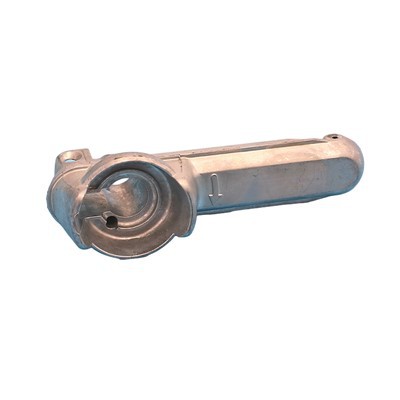
If you’re working on a new industrial product, or struggling with quality issues from a mold that just isn’t performing, we’re here to help. We don’t just sell molds—we partner with manufacturers to design, build, and test molds that deliver consistent, high-quality parts, on time and on budget. Contact our team to discuss your project, and we’ll walk you through the process, answer any questions, and help you design a mold that works for your long-term goals.
Die Casting Parts References
- Die Casting Handbook. American Foundry Society, 2019.
- Design for Die Casting Guidelines. Automotive Industry Action Group, 2021.
- Tool Steel Selection and Application for Die Casting Molds. ASM International, 2020.
- Conformal Cooling for Die Casting: Design and Performance Benefits. Journal of Manufacturing Processes, Vol. 45, 2020.
- Shrinkage Compensation in Die Casting Mold Design. International Journal of Precision Engineering and Manufacturing, Vol. 22, No. 10, 2021.
Suzhou Ruide Die-Casting Mold Co., Ltd.
As one of the leading die casting mold manufacturers and suppliers in China, we warmly welcome you to buy durable die casting mold made in China here from our factory. All customized products are with high quality and competitive price. Contact us for pricelist.
Address: No.2, Wanchen Road, Huayang Village, Wangting Town, Xiangcheng District, Suzhou City, Jiangsu Province
E-mail: jada@cnrdmj.com.cn
WebSite: https://www.cnrdmold.com/
