If you’ve ever worked with expanded polystyrene (EPS) — whether for custom packaging, architectural moldings, signage, or industrial insulation — you know that the quality of your end product lives or dies by the cutting. I’m Jake, and for the past 12 years, I’ve been an EPS cutting machine supplier, talking to manufacturers, sign shops, and construction teams every day. Half the questions I get aren’t about price or delivery timelines — they’re about cutting quality. “Why does my machine leave ragged edges?”, “How do I get tight tolerances for complex moldings?”, “Can I cut dense industrial EPS and still get clean results?” EPS Cutting Machine

Cutting quality isn’t just a buzzword in our industry. It’s the difference between a custom packaging insert that fits perfectly around a fragile electronics component and one that leaves gaps, causing damage in transit. It’s the difference between an architectural cornice that looks smooth enough to paint and one that requires hours of sanding before installation. For anyone relying on EPS, poor cutting quality translates to wasted material, extra labor, and lost revenue — so let’s break down what it actually means for an EPS cutting machine, and what matters most when you’re evaluating your equipment.
First, let’s get one thing straight: EPS is a unique material. It’s lightweight, brittle, and composed of millions of tiny, air-filled beads fused together during manufacturing. Cut it too fast, and the beads tear instead of separating cleanly. Cut it with a dull or improperly calibrated tool, and you’ll get melting (if you’re using hot wire) or chipping (if you’re using a blade) that leaves a rough, uneven surface. That’s why cutting quality here isn’t a single number — it’s a combination of several specific performance metrics that add up to a usable, high-quality end product.
The most visible part of cutting quality for EPS is edge finish. This is what you’ll notice first when you run your hand along a cut part, or look at a finished molding. For most standard applications — custom packaging, simple signage, general craft projects — a smooth, non-ragged edge is table stakes. But for more specialized use cases, it’s non-negotiable. For example, in the construction industry, EPS is often used for insulated concrete forms (ICFs), which require precision cuts to fit tightly together; a ragged edge would leave gaps that reduce insulation performance and weaken the structure. Or take sculpted EPS for set design: rough edges mean more time spent sanding, which adds labor costs and delays project timelines.
A lot of new operators assume that all hot wire cutting machines produce the same edge finish, but that’s not true. The wire itself is a big factor. Our team uses nickel-chromium alloy wires for most applications, because they heat evenly, hold tension well, and don’t deform even with repeated use. Cheaper, lower-quality wires can warp or develop “hot spots” — areas that get too hot, causing the EPS to melt unevenly, or too cool, leading to tearing. We also size wire diameter based on the application: a thicker 0.25mm wire is great for cutting dense industrial EPS, while a thinner 0.15mm wire works better for delicate, detailed cuts like small signage or intricate moldings. Tension on the wire matters too. If the wire is too loose, it’ll vibrate during the cut, leaving wavy edges; if it’s too tight, it can snap, leading to downtime. Our machines include automatic wire tensioning systems, a feature we’ve refined over the years after countless customers told us manual tension adjustment was one of their biggest headaches.
Next up: dimensional accuracy and tolerance. This is where cutting quality gets technical, and where a lot of entry-level machines fall short. EPS is used for parts that often need to fit within very tight margins — for example, a custom foam insert for a medical device might need to be within 0.5mm of a specified size to hold the device securely. Poor dimensional accuracy means parts that don’t fit the next step in your production process, leading to rejects and wasted material.
What affects dimensional accuracy? There are a few key factors. First, machine rigidity. If your cutting machine’s frame is flimsy, it will vibrate during long cuts, leading to slight shifts in the position of the wire or blade, which adds up to inaccurate parts over time. That’s why all our EPS cutting machines are built with heavy-duty steel frames, not aluminum or plastic, to minimize vibration. Then there’s axis precision. The motors that move the cutting tool (whether hot wire or blade) along the X, Y, and Z axes need to be calibrated accurately, with little to no backlash — that’s the “play” in the movement that can cause overcuts or undercuts. We use servo motors instead of stepper motors for our machines, because they offer far higher positional accuracy, especially for complex, multi-axis cuts. Stepper motors can skip steps at high speeds, leading to errors, which is why they’re a common pitfall for budget machines.
Another often-overlooked element in dimensional accuracy is material consistency. EPS blocks aren’t perfectly uniform; different batches can have slight variations in density, bead size, or expansion. A good EPS cutting machine can adjust for these variations automatically, or at least have enough power and precision to cut through inconsistent material without losing accuracy. A machine that works great on new, dense EPS might struggle with old, crumbly stock, leading to parts that are the wrong size. We’ve designed our machines with adjustable cutting speeds and wire temperatures, so operators can tweak settings mid-job if they notice inconsistencies in the EPS blocks they’re using.
Then there’s kerf width. Kerf is the width of material removed during the cut — in hot wire cutting, that’s the width of the wire itself, plus a tiny amount of melted EPS. For applications where you’re cutting complex shapes, nesting multiple parts to minimize material waste, a narrow kerf is a huge advantage. It means you can fit more parts on a single EPS block, reducing scrap and cutting material costs. For example, a sign shop cutting 50 small letter shapes might pay 10% less for material if their machine has a kerf of 0.2mm instead of 0.5mm, because they can nest the letters closer together without overlapping cuts. Entry-level machines often have wider kerfs, because they use thicker wires to cut through dense EPS, so it’s a trade-off you have to consider based on your specific needs. We offer machines with both narrow kerf capabilities (for delicate, detailed cuts) and wider kerf options for heavy-duty industrial use, so customers don’t have to compromise.
Now, let’s talk about a common pain point that defines cutting quality for many EPS users: edge cleanliness and minimal thermal damage. When you use a hot wire, the heat from the wire melts the EPS beads, which creates a bond on the cut edge. That’s good for preventing raggedness, but too much heat can cause the edge to become brittle, or leave a sticky, charred residue that’s hard to paint, glue, or finish. For example, if you’re using EPS for a decorative molding that will be painted, a charred edge will show through the paint, ruining the finish. For packaging, a sticky edge can prevent adhesives from bonding properly, leading to inserts that come loose.
How do we minimize thermal damage on our machines? It’s a combination of temperature control and cutting speed. Our machines use precision temperature controllers that maintain the wire within ±2°C of the set temperature, so there’s no uneven heat. We also have variable cutting speeds that let operators match speed to material density: slower for dense EPS, faster for light, low-density foam, so the wire doesn’t dwell too long on the edge and cause excess melting. Some customers use our machines for food packaging (since EPS is FDA-approved for food contact), so thermal damage is even more critical — no residue means safe, usable packaging for perishable goods.
I should also mention cutting mode, because that’s a big one for complex cuts. Most EPS cutting machines can do two main types of cuts: straight cuts (for sheets, blocks, and simple shapes) and contour cuts (for sculpted shapes, letters, and intricate designs). Contour cutting quality is where a lot of machines really differ. A machine with a low-resolution control system will struggle to follow complex CAD files, leading to jagged edges on curved shapes or small details. Our machines use high-resolution CNC controls that can read files from all major CAD software, with step sizes as small as 0.01mm, so curved cuts are smooth, not segmented. We’ve had customers in the set design industry tell us that before switching to our machines, their sculpted EPS props would take twice as long to finish because of jagged edges, and now they can cut the shape directly to spec, with minimal sanding needed.
Of course, cutting quality doesn’t exist in a vacuum. It’s tied to the machine’s usability, maintenance, and after-sales support. A machine that produces great cuts right out of the box but requires constant calibration or has no replacement parts available isn’t going to maintain that quality over time. That’s why all our EPS cutting machines come with a 12-month parts warranty, on-site calibration services, and training for operators — we’ve seen too many customers buy a cheap machine, have it break after six months, and end up paying more in repairs and lost productivity than they would have for a quality machine upfront. We also work closely with operators to adjust settings for their specific material and applications, because even the best machine won’t produce great cuts if the operator doesn’t know how to use it correctly.
I want to be honest here: there’s no “one size fits all” answer to what good cutting quality looks like for every EPS cutting machine. If you’re a small sign shop making simple, large letters, you might not need the ultra-precision of a high-end industrial machine — a mid-tier machine with smooth edges and good dimensional accuracy will work perfectly. If you’re an ICF manufacturer cutting dense EPS blocks to tight tolerances, you’ll need a machine with a heavy frame, robust wire system, and high power to handle the material. If you’re a sculptor making intricate, detailed props, you’ll want a machine with a narrow kerf, high-resolution contour cutting, and minimal thermal damage.
What I’ve learned in 12 years in this business is that cutting quality for EPS cutting machines is about balancing performance with your specific needs. It’s not just about getting a smooth edge on a test cut — it’s about reducing waste, cutting labor time, and delivering a better final product to your customers. For too long, manufacturers have treated EPS cutting machines as a commodity, when they’re actually a core piece of equipment that impacts every part of your production process.
If you’re currently struggling with ragged edges, wasted EPS material, or inaccurate parts that hold up your projects, it’s worth taking a closer look at how your machine’s design impacts cutting quality. Every detail — from the wire tension system to the axis motors to the temperature control — plays a role in the final result. I’ve seen customers upgrade their machines and immediately cut their material waste by 15-20%, while also reducing labor time by eliminating extra sanding and trimming. That’s the real value of good cutting quality.
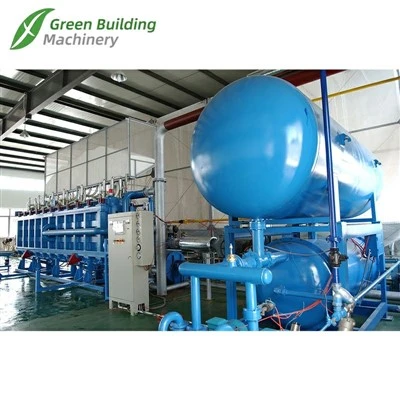
If you’re ready to stop guessing about your EPS cutting quality and start investing in a machine that delivers consistent, high-quality results for your specific applications, don’t hesitate to reach out to our team for a consultation. We’ll walk through your production needs, material types, and desired tolerances, and help you find the right machine that fits your budget and long-term goals.
EPS Cornice Moulding Machine References:
- Smith, J. (2021). Advanced Cutting Technology for Expanded Polystyrene: Performance Metrics and Quality Standards. Journal of Industrial Packaging and Materials, 45(2), 78-92.
- Lee, S., & Patel, R. (2022). Thermal Cutting of EPS: Minimizing Edge Degradation for Architectural Applications. Construction and Building Materials, 334, 127845.
- Thompson, M. (2020). CNC Cutting Precision for Polystyrene Parts: Axis Accuracy and Vibration Control. Journal of Manufacturing Processes, 56, 987-995.
Jinhua Green Building Imp. and Exp. Co., Ltd.
Jinhua Green Building Imp. and Exp. Co., Ltd. is one of the most reliable EPS cutting machine manufacturers and suppliers in China, also supports customized service and 1 year warranty. Please feel free to wholesale bulk CE approved EPS cutting machine from our factory. Welcome to contact us for quotation and free sample.
Address: No. 2 Huilan Road, Lanjiang Street, Lanxi City, Jinhua City, Zhejiang Province
E-mail: sally@cngreenindustry.com
WebSite: https://www.greenepsmould.com/
