If you’ve ever stood in a kitchen, tongs pulled straight from a 400°F oven, staring at your quartz countertop and wondering if you’re about to ruin a $2,000 slab you just installed, you’re not alone. As a kitchen quartz slab supplier who’s fielded this question at least a dozen times a week for the past seven years, I can tell you it’s one of the most common (and most misunderstood) inquiries our customers bring up during consultations. A lot of the misinformation online frames quartz as either totally heatproof or totally fragile, and that couldn’t be further from the truth. Today, I want to break down the science behind quartz’s heat resistance, what actually happens when you place a hot pan on it, what you can do to protect your investment, and when to call us for guidance on replacing a damaged slab. Kitchen Quartz Slab
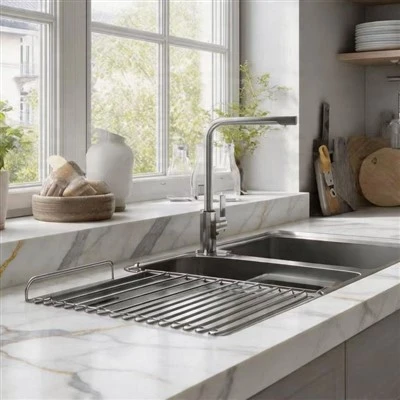
First, let’s get clear on what kitchen quartz slabs are made of—because that’s where their heat behavior starts. Unlike natural stone like granite, which forms underground over millions of years, engineered quartz is a man-made composite. The formula typically consists of 90 to 95 percent ground natural quartz crystals (the hardest mineral on Earth, for context) and 5 to 10 percent polymer resins, pigments, and other binders that hold everything together and give the slab its color and finish. That resin part is key when we talk about heat. Quartz crystals themselves have a very high melting point—around 1,700°C (3,092°F)—so pure quartz can handle extreme heat with no issue. It’s the polymer binder, which makes up just a small fraction of the slab, that’s the weak link here.
Now, what do industry test results say about how much heat a typical kitchen quartz slab can handle? Most reputable quartz manufacturers (including the ones we partner with to source our slabs) conduct standardized heat resistance tests. The general benchmark that’s become standard in our industry is that quartz slabs can withstand sustained temperatures of up to 300°F (149°C) for short periods without damage. That means a hot pan fresh from the stovetop, which is usually around 250 to 300°F, is totally safe if you set it on a quartz countertop for a minute or two. The same goes for a baking sheet straight out of a 350°F oven—even if you leave it there for 5 or 10 minutes, it’s unlikely to cause harm.
But here’s where the confusion creeps in. Those test results almost always specify “short periods” and the maximum temperature before damage. What happens if you exceed that? If you place something hotter than 300°F directly on the slab, like a roasting pan pulled from a 450°F oven or a cast iron skillet that’s been searing on a stovetop and hits 500°F or more, you’re at risk for thermal shock. Thermal shock occurs when a material experiences a sudden, rapid change in temperature—so the top layer of the slab heats up too fast, while the layer just below it stays cool. This causes the surface to expand unevenly, which can leave permanent marks: those are the dull, cloudy, yellowish, or even discolored patches you might’ve seen on someone’s counter. In severe cases, it can even cause small cracks, especially along the seams or in thinner sections of the slab.
I’ve seen this first hand over the years. A customer in Austin, Texas, called us two years ago panicking because she’d set a steaming hot cast iron Dutch oven—she estimated it was around 475°F—on her new quartz island to cool, and found a faint yellow ring when she lifted it. We were able to buff out the minor discoloration with a gentle, non-abrasive cleaner, but had to replace a section of slab under another customer in Chicago who set a 500°F pizza stone directly on her quartz counter after pulling it from the oven, which caused a small crack along the edge. It’s not a flaw in the quartz itself, it’s a simple case of not accounting for that 300°F limit.
Another common myth I hear all the time is that “all quartz heat resistance is the same.” That’s not true either. The quality of the resin binder, the manufacturing process, and even the finish of the slab can impact how well it handles heat. Higher-end quartz slabs, which use denser, more heat-resistant polymer blends, often have a slightly higher heat threshold—some manufacturers test theirs up to 350°F (177°C) for short periods. Cheaper, off-brand quartz slabs, on the other hand, may use lower-quality resins that start to break down at temperatures as low as 200°F, leading to more frequent discoloration or damage even with mild heat. That’s why when we select the quartz slabs we supply to customers, we only work with manufacturers who publish third-party test results for heat resistance, and we always share that info with anyone who’s nervous about heat damage.
Wait, but what about everyday kitchen tasks? Most of us aren’t going to be setting 500°F pizza stones on our counters every day, right? For regular cooking, this limit is almost never an issue. A pot of boiling water (212°F) is way below 300°F, so setting a hot pot stand on your counter after draining pasta is totally fine. Even a warm griddle that’s only been used to cook pancakes and isn’t left on for hours won’t reach temperatures high enough to damage quartz. The real risk comes from items that are pre-heated at high temperatures and transferred directly, or items that stay hot on the same spot for a long time. For example, if you leave a 350°F baking sheet on the same 6-inch section of your counter for 30 minutes while you finish assembling dinner, that’s longer than the “short period” in the test, and could cause uneven heating and discoloration over time.
So what can you do to protect your quartz slab from heat damage? The good news is that it’s simple, and you don’t have to live with a bunch of ugly mats all over your kitchen. The first and most important tip is to always use trivets, hot pads, or pot holders under any item that’s hotter than your slab’s heat limit. We recommend silicone trivets or thick wooden hot pads, since they’re heat resistant themselves and don’t scratch the quartz surface. If you love baking or cooking, get a set of heavy-duty trivets that can handle up to 500°F—most of them are small enough to tuck in a drawer when you’re not using them, so they won’t ruin the look of your kitchen.
Another simple tip: let hot items cool for a minute before placing them on the counter. That Dutch oven I mentioned earlier? If that customer had set it on the stove to cool for 5 minutes first, its temperature would’ve dropped to around 300°F, which is safe for quartz. For baking sheets and roasting pans, setting them on a wire rack instead of directly on the counter also helps, since it lets air circulate and cool the pan faster. And if you have a stovetop or oven built into your quartz counter (a common setup in modern kitchens), pay extra attention to the area around the burner or oven opening. Those spots experience more regular exposure to high heat, so adding a thicker trivet there is a good idea.
What if you do end up with a mark on your quartz slab? Don’t panic. Minor discoloration or cloudy spots from heat exposure can often be fixed with a gentle, non-abrasive quartz cleaner or a paste made from baking soda and water. Rub it into the mark in circular motions with a soft cloth, rinse it off, and see if that improves the appearance. If the mark is deeper or there’s a small crack, that’s when you should reach out to us. We can help you assess the damage, whether it’s a simple repair or a full slab replacement, and give you guidance on how to avoid it in the future.
I also get asked a lot if quartz is better than granite for heat resistance, or vice versa. Granite is a natural stone, and it’s very heat resistant—most granite slabs can handle temperatures up to 1,200°F, which is way higher than quartz. But granite is porous, so it needs to be sealed every 1 to 2 years to prevent stains from oil, wine, or other spills. Quartz, on the other hand, is non-porous, so it doesn’t need sealing at all, which makes it much easier to clean for everyday spills. It’s a trade-off, not a question of one being “better” than the other—if heat resistance is your top priority, granite is a good choice, but if low maintenance and stain resistance are more important, quartz is still a solid option as long as you follow the heat guidelines.
Let’s also address a really common fear: does placing a hot pan on quartz void the warranty? Most reputable quartz manufacturers offer a 10 to 25 year warranty on their slabs, but that warranty almost always excludes damage from heat that exceeds the manufacturer’s specified limit, or damage from failing to use trivets or hot pads. That’s why it’s so important to read the fine print when you purchase a quartz slab—when we supply slabs to our customers, we include a copy of the manufacturer’s warranty, and we go over the heat guidelines with them during installation, so there are no surprises later. We’d never want a customer to find out their warranty doesn’t cover damage because they didn’t know about the heat limit.
I think the biggest takeaway here is that kitchen quartz slabs are not “totally heatproof,” but they are heat resistant enough for nearly all everyday kitchen use. The myth that they’re super fragile and will crack at the sight of a warm pan is just that—a myth. The real risk comes from not being careful with extremely hot items, or not using trivets when needed. We’ve installed thousands of quartz slabs over the years, and the vast majority of our customers go years without any heat-related issues, simply because they follow a few small precautions.
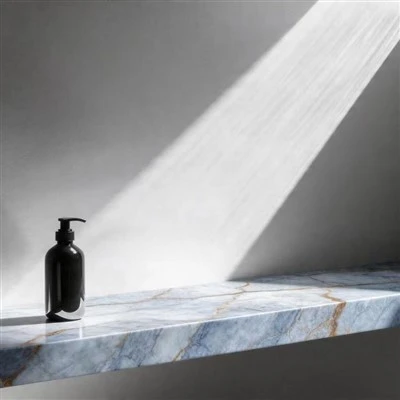
If you’re in the market for a new kitchen quartz slab, or if you already have one and have questions about heat resistance, we’re here to help. We can walk you through the different heat resistance ratings of the slabs we supply, answer any other questions you have about care and maintenance, and work with you to find a slab that fits your kitchen’s style and needs. Don’t hesitate to reach out for a consultation—we’ll make sure you have all the info you need to keep your quartz slab looking great for years to come.
Kitchen Quartz Slab References:
- National Kitchen and Bath Association. (2022). Engineered Quartz Countertop Care and Performance Guidelines.
- Stone Coat Countertops. (2021). Heat Resistance of Engineered Quartz: Testing and Best Practices.
- International Organization for Standardization. (2019). Standard Test Method for Thermal Resistance of Dimension Stone and Engineered Stone.
Wuhu Junde New Material Technology Co., Ltd.
With abundant experience, we are one of the most professional kitchen quartz slab manufacturers and suppliers in China. We warmly welcome you to wholesale high quality kitchen quartz slab at competitive price from our factory. If you have any enquiry about cooperation, please feel free to email us.
Address: No.8 Yulin Road, Xinwu Economic Development Zone, Anhui Province, China
E-mail: 1127319898@qq.com
WebSite: https://www.myjundequartz.com/
