Hey everyone, if you’ve ever had a joint replacement, a dental implant, or even a bone plate that helped you heal after a fracture, you’ve probably interacted with medical titanium bars and didn’t even realize it. As someone who’s been supplying these bars for years, I get asked ALL the time: how do they stack up strength-wise against other metals used in medical devices? It’s not a trivial question—if a metal isn’t strong enough, an implant could fail early; too strong, and it might stress out the surrounding bone, leading to more issues down the line. Let’s break this down like we would over a coffee with a client, no stuffy textbook jargon (I’ll keep it real, I promise). Medical Titanium Bars
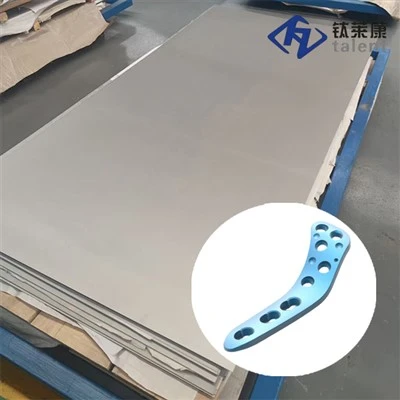
First off, let’s talk strength basics because that’s where people get confused. When we say “metal strength” in medical terms, we’re not just talking about how hard it is to bend something (that’s hardness)—we’re talking about yield strength (how much stress it can take before it permanently bends) and ultimate tensile strength (the max stress before it breaks apart). That’s key because implants can’t just bend a little; they need to hold their shape through daily use: stepping on a new hip, chewing with a dental implant, lifting groceries with a forearm plate.
Let’s start with the old standby in medical metals: stainless steel. This has been around forever—way before titanium was a big deal. The stainless steel most common for medical use is 316L surgical grade. I remember my first clients, back when I started out, almost exclusively used 316L for things like bone screws and temporary plates. What’s its strength? Yield strength is around 215 MPa, ultimate tensile strength is about 530 MPa. Wait, that’s not bad, right? But here’s the catch: stainless steel is heavier than titanium, and it’s not great for something called “modulus of elasticity.” Translated, that’s how much a metal flexes under pressure. Stainless steel has a super high modulus—like 190 GPa—way stiffer than bone, which is around 10-30 GPa. So when you get a stainless steel hip, the implant takes almost all the load, and the surrounding bone doesn’t get the stress it needs to stay strong. That leads to bone loss, which is a huge reason some patients have to get a revision surgery later. Been there, seen that happen with old 316L implants.
Next up, cobalt-chromium alloys. These are another big one—used for knee replacements, some hip stems. Their strength is way higher than stainless steel: yield strength around 550 MPa, ultimate tensile strength up to 900 MPa. That’s a big jump, and they’re more wear-resistant than stainless steel, so they last longer. But again, modulus of elasticity is through the roof—about 210 GPa, even stiffer than stainless steel. Plus, cobalt-chromium is way heavier than titanium, which makes a difference for patients, especially younger ones or people active in sports. I had a pro athlete client a few years back who switched from cobalt-chromium to titanium for his ankle implant because the extra weight was making his existing knee ache more. He swears it made a huge difference.
Now, let’s get to medical titanium bars specifically. There are two main types we supply commercially pure (CP) titanium and titanium alloys like Ti-6Al-4V, which is the workhorse for most implants. CP titanium is super biocompatible—your body doesn’t reject it easily, which is why it’s used for things like dental posts and small bone pins. Its yield strength is around 240 MPa, ultimate tensile strength about 480 MPa. That’s actually a touch higher than 316L stainless steel, but here’s the magic with the alloy: Ti-6Al-4V. Its yield strength is around 880 MPa, ultimate tensile strength up to 950 MPa. Wait, that’s almost as strong as cobalt-chromium, but with a way lower modulus—about 110 GPa. That’s way closer to bone’s modulus, so the load is distributed way better between the implant and the surrounding bone. No more bone loss from the implant taking all the stress. That’s why titanium has taken over so much of the market in the last 20 years.
But wait, don’t get me wrong—titanium isn’t always the strongest, and that’s okay. For some applications, you need that extra punch. Like, spinal fusion rods need to hold two vertebrae perfectly aligned while the bone heals, and sometimes doctors still use higher-strength stainless steel or even titanium alloys modified for that extra oomph. But for 90% of the implants we do, titanium’s strength-to-weight ratio is unbeatable. Let’s put that into perspective: Ti-6Al-4V is about 40% lighter than cobalt-chromium, with almost the same strength. That’s a game-changer for patient recovery—less strain on the body, easier mobility post-surgery, lower risk of complications.
Another thing people sleep on is fatigue strength. That’s how well a metal holds up to repeated stress—like walking thousands of steps a day, or chewing thousands of times a year. Titanium’s fatigue strength is way better than stainless steel. I’ve had clients tell me about stainless steel plates that broke 10 years after implantation because of repeated bending, but I can’t remember a single case of a properly manufactured Ti-6Al-4V bar failing from fatigue. That’s a huge deal for long-term implant success.
But let’s be real, it’s not all sunshine and rainbows. Titanium does have downsides. It’s more expensive than stainless steel, which is why some hospitals still use stainless steel for temporary implants that only need to hold for a few months while the bone heals. Also, machining titanium is trickier—if you don’t have the right tools, it can work-harden too fast and crack, which is why our factory uses specialized CNC machines just for medical titanium bars. That’s why some smaller suppliers cut corners, but we never do—quality control is non-negotiable for us.
I should also mention why biocompatibility ties into strength here. A lot of people don’t realize that if a metal isn’t biocompatible, your body will react to it, which can weaken the implant over time. Titanium forms a thin, invisible oxide layer on its surface that actually makes it super corrosion-resistant—way more than stainless steel or cobalt-chromium. That oxide layer keeps your body from breaking down the metal, so the implant stays strong longer. No corrosion = no weakening from within. That’s another big one I always highlight to new clients.
Let’s wrap this up with a quick comparison chart (I promise it’s not as scary as it sounds) to make it easy:
- 316L Stainless Steel: Yield 215 MPa, Tensile 530 MPa, Modulus 190 GPa, Weight High
- Cobalt-Chromium: Yield 550 MPa, Tensile 900 MPa, Modulus 210 GPa, Weight Very High
- CP Titanium: Yield 240 MPa, Tensile 480 MPa, Modulus 110 GPa, Weight Medium
- Ti-6Al-4V Titanium: Yield 880 MPa, Tensile 950 MPa, Modulus 110 GPa, Weight Medium-Light
See where titanium stands? It hits that perfect sweet spot for most medical uses—strength that’s almost as high as cobalt-chromium, with a modulus that works with bone, and way better strength-to-weight.
But here’s the thing—every patient, every implant, every surgeon has different needs. A dental implant might use CP titanium, a hip stem might use Ti-6Al-4V, a temporary bone plate might use stainless steel. That’s why we carry a full range of medical titanium bars and can custom-make them to fit any specific requirement, whether it’s a unusual size for a pediatric implant or a special alloy for a high-stress spinal application.
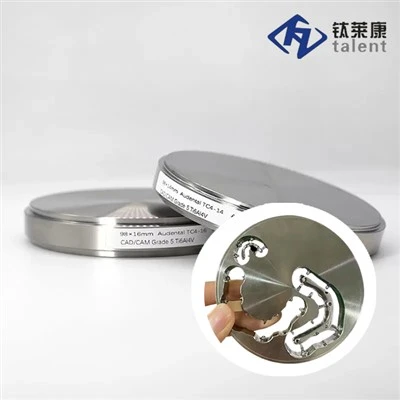
If you’re a hospital administrator, a surgeon, or someone who works with medical devices and is looking to switch to better implants, or just have questions about what’s right for your project, hit us up. We’re not just a supplier—we’ve been in this game long enough to know what works, what doesn’t, and how to help you get exactly what you need without the guesswork. We’ve worked with clinics all over, from small local practices to large medical device manufacturers, and we’re always here to chat through your needs. No salesy lines, just straight talk about what metals perform where, because at the end of the day, we’re all here to help patients heal better.
Industrial Titanium Bars References:
- Niinomi, M. (1998). Mechanical properties of biomedical titanium alloys. Materials Science and Engineering: A, 243(1-2), 231-236.
- Long, M., & Rack, H. J. (1998). Titanium alloys in total joint replacement—a materials science perspective. Biomaterials, 19(18), 1621-1639.
- ASTM F136-19, Standard Specification for Wrought Titanium-6Aluminum-4Vanadium Alloy for Surgical Implants. ASTM International.
Baoji Tailaikang High-Tech Metal Materials Co., Ltd.
With abundant experience, we are one of the most professional medical titanium bars manufacturers and suppliers in China. Please feel free to buy medical titanium bars for sale here and get pricelist from our factory. For price consultation, contact us.
Address: No. 1, Southeast Cross of Gaoxin Avenue and Fenghuang 3rd Road, High-tech Development Zone, Baoji City, Shaanxi Province, China
E-mail: sale@tlkjs.com
WebSite: https://www.tlkmetal.com/
