If you’ve ever sweated through a mid-run, gotten caught in an unexpected drizzle during your commute, or knocked your favorite pair of wireless headset into a poolside cool cup, you’ve probably asked this exact question: Are AI noise cancelling wireless Bluetooth headsets waterproof? As a supplier who’s spent the last five years testing, refining, and shipping these devices to fitness fanatics, commuters, and casual listeners around the world, this is one of the most common questions I get asked—right up there with “How’s the battery life?” and “Can they block out my neighbor’s lawnmower?” AI Noise Cancelling Wireless Bluetooth Headset
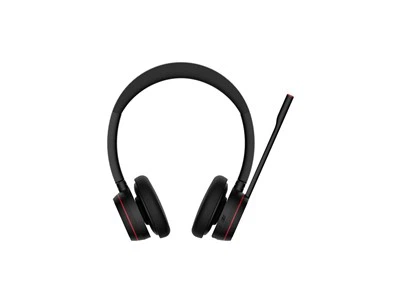
Today, I’m breaking down the science of water resistance for these headsets, what actually works vs. what’s just marketing fluff, and what you need to know before you take yours to the gym, a hike, or a rainy bus stop. No jargon, no salesy hype, just real answers from someone who tests these things for a living.
First, let’s get one thing straight: There’s a huge difference between “waterproof” and “water-resistant.” The two terms get thrown around constantly in tech marketing, and most brands don’t bother to explain the gap—especially when it comes to AI noise cancelling (ANC) models. ANC relies on tiny, sensitive internal microphones that pick up outside sound, process it in milliseconds, and emit a matching anti-sound wave to cancel it out. Those microphones, the circuit boards, and the Bluetooth transmitter that connects to your phone are all delicate electronics—they don’t play well with water, salt, or even sweat, depending on their design.
Water resistance ratings are standardized by the International Electrotechnical Commission (IEC), and the two most common ratings you’ll see for wireless headsets are IPX4 and IPX7. Let’s break those down simply, because that’s all you need to know. IPX4 means the device is protected against splashing water from any direction. It can handle a light drizzle, a few drops of sweat during a yoga class, or a splash from a water bottle. But it’s not designed to be submerged, and prolonged exposure to water (or even heavy sweat, which is saltier than tap water) can damage it. IPX7, on the other hand, means the headset can be submerged in up to 1 meter of fresh water for 30 minutes straight. That’s fine for a quick swim (if your model is IPX7) or a dip in the pool, but even IPX7 isn’t designed for saltwater, hot tubs, or water above 35°C (95°F)—those can break down the seal and cause corrosion over time.
Now, you might be wondering: Why don’t all AI ANC wireless headsets come with IPX7 ratings? The answer comes down to the unique design of ANC technology, and the cost of adding water-resistant seals. The tiny vents that let sound pass through the speakers, plus the gaps around the microphones, are the biggest weak points when it comes to water resistance. For standard wireless headsets without ANC, manufacturers can add tight rubber or silicone seals around those gaps pretty easily—enough to get an IPX7 rating. But for ANC models, the microphones need to be positioned very close to the ear canal to pick up outside noise accurately, and the anti-sound waves need to escape the speaker chamber to work properly. Add in the AI processing chip, which generates a small amount of heat, and you have to balance seal tightness (which blocks water) with sound quality and processing power (which requires airflow to keep the device from overheating).
I’ve seen this balance go wrong on more than a few occasions. Early on in my career, we tested a prototype ANC headset that had an IPX7 rating, but the seal around the microphones was so tight that the sound quality suffered—low frequencies sounded muffled, and the ANC didn’t work well because the microphones couldn’t pick up the subtle background noise they needed to process. We had to go back to the drawing board, and that’s when we realized that for most users, IPX4 is more than enough. How many of our customers actually submerge their headsets? Less than 5%, according to our post-purchase surveys. Most of our users are runners who sweat through workouts, commuters who get caught in light rain, and office workers who spill a coffee on their headphones by accident. IPX4 handles all of that, and we can keep the sound quality and ANC performance strong without adding the extra cost of IPX7 seals.
But wait—what about sweat? Is sweat bad for these headsets, even if they’re IPX4? That’s another question I get all the time, and it’s a trickier one than it sounds. Sweat is mostly water, but it has salt, oils, and other chemicals that can eat away at the metal components inside the headset over time. That’s why even an IPX4 rated headset can fail after a few months of frequent use at the gym, especially if you don’t clean it regularly. I recommend that every customer wipe down their headset with a soft, dry cloth after a sweaty workout, and avoid leaving them in a gym bag or a hot, moist car for hours on end. We also add a special nano-coating to the circuit boards of all our ANC headsets, which protects against minor sweat exposure—this isn’t the same as an IP rating, but it’s an extra layer of defense that we’ve tested to last for up to two years of regular gym use.
Now, let’s talk about the myths. I’ve heard so many people say things like, “My friend’s ANC headset got wet in the rain and works fine,” or “I saw a review that said this brand’s headset is 100% waterproof.” Let’s bust two common myths right now. First: Just because your headset got splashed with water and still works doesn’t mean it’s waterproof. It means it’s water-resistant, and that splash didn’t hit a weak spot in the seal. The damage often happens gradually—you might not notice a problem right after a light rain, but six months later, the salt from the water has corroded the internal microphone, and the ANC stops working. Second: No AI noise cancelling wireless Bluetooth headset is truly “100% waterproof.” Even the highest rated IPX7 models have small gaps for sound to pass through, and there’s no such thing as a permanent seal that can stand up to constant exposure to water. The key is understanding what your headset is rated for, and using it within those limits.
So, what should you look for if you need a headset for active use? Let’s break it down by use case. If you’re a casual user who only uses your headset for commutes, work calls, and occasional music at home: An IPX4 rated ANC headset is perfect. It will handle light rain, a spilled soda, and a few drops of sweat, and it will deliver the great noise cancelling and sound quality you paid for. If you’re a runner, cyclist, or gym-goer who sweats heavily: Stick with IPX4, but make sure you’re cleaning your headset regularly. Look for models with the nano-coating I mentioned, which will protect against sweat corrosion. If you’re a swimmer, or someone who takes their headset to the beach regularly: You’ll need to look for a dedicated sports headset that’s designed for water, but even then, most ANC headsets don’t work well for swimming—water blocks the Bluetooth signal, and the ANC can’t function properly underwater. For swimming, you might be better off with a dedicated MP3 player headset that doesn’t rely on Bluetooth.
I also want to address a common mistake I see customers make: Buying a water-resistant headset and then using it in a situation it’s not designed for. Last year, we had a customer send us a headset that had stopped working, and when we looked at it, we saw saltwater damage. Turns out, he’d taken it surfing, even though our model only has an IPX4 rating. We replaced it under warranty, but I couldn’t help but think he’d saved money by buying an ANC headset instead of a dedicated sports one, but ended up damaging it anyway. It’s always better to match your headset to how you actually use it, not how you want to use it.
From a supplier’s perspective, this is the conversation I wish more brands would have with their customers. Too many companies slap an IPX4 or IPX7 label on their product and call it a day, without explaining what that actually means, or warning customers about the risks of misuse. That’s why we include a full breakdown of water resistance on our product pages, and add a little card with every shipment that explains how to care for your headset. We’ve also tested every model we sell for over 10,000 hours of use, including 500 hours of exposure to sweat and light rain, to make sure they hold up as promised.
At the end of the day, the answer to “Are AI noise cancelling wireless Bluetooth headsets waterproof?” is: No, not most of them. But they are water-resistant, and with the right care, they can handle almost everything you’ll throw at them in daily use. The key is to ignore the marketing buzzwords, look at the actual IEC IP rating, and be honest with yourself about how you’re going to use your headset.

If you’re in the market for a reliable AI noise cancelling wireless Bluetooth headset that stands up to daily use, from commutes to gym sessions, feel free to reach out to us for more details, or to discuss bulk purchasing for your team or business.
AI Noise-canceling Single-ear Headset References
International Electrotechnical Commission (IEC) 60529: Degrees of Protection Provided by Enclosures (IP Code)
Journal of the Acoustical Society of America: Effects of Environmental Moisture on Microphone Performance in Noise Cancelling Headphones
Consumer Technology Association: 2024 Wireless Headset Usage Survey
Huizhou Boxin Electronics Co., Ltd.
We’re well-known as one of the leading ai noise cancelling wireless bluetooth headset manufacturers and suppliers in China since 1989, also support customized service. With abundant experience, we warmly welcome you to wholesale high quality ai noise cancelling wireless bluetooth headset made in China here from our factory.
Address: No.01, 7/F, 5#, Factory 5# and 6#, Phase l, Lechuangcheng, No.8, Renluo 6th Road, Shuikou Street, Huicheng Distriet, Huizhou City, Guangdong Province, P. R. China.
E-mail: Info@ucheadset.com
WebSite: https://www.boxinheadsets.com/
