Hey there, fellow packaging pros! Let’s cut to the chase—if you’re in the game of shrink wrapping anything from pallets of goods to food products, you’ve probably wondered: can vacuum metalized PE film actually do shrink wrap right? As a supplier who’s spent the last 8 years tweaking this exact material for industrial and consumer use, I’ve fielded this question at least a hundred times, and the short answer is… it’s not a one-size-fits-all “yes” or “no.” Let’s break down what makes vacuum metalized PE (VMPE) different, how it works with shrink wrapping, and when it’s actually worth using (instead of a standard PVC or POF shrink film). Vacuum-Metalized PE Film
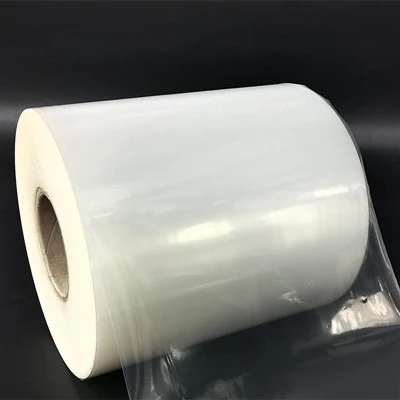
First, let’s get a quick refresh on what VMPE is, for folks who might be new to the acronym. Regular PE film is just plastic—think the flimsy wrap on a water bottle case. Vacuum metalized PE takes that same PE base, zaps a super thin layer (like, atoms thin—10 to 100 nanometers, for context) of aluminum onto it. That’s where the “vacuum metalized” part comes in: the process happens in a vacuum chamber so the aluminum bonds evenly, no weird streaks or gaps. The aluminum layer gives it two big perks standard PE can’t: it’s got a metallic sheen that looks way more premium, and it blocks light, moisture, and oxygen way better. That’s why you see it on things like candy wrappers, cereal boxes, and even some pharmaceuticals.
Now, shrink wrap is all about stretching a film over a product, then applying heat so it contracts tight, right? Standard shrink films (POF is big for consumer stuff, PVC for industrial) have molecules that are oriented, or pulled tight, when they’re made—heat makes them snap back to that original shape, hence the “shrink.” So the question is: does VMPE have those oriented molecules, and does the thin aluminum layer mess with that shrinkage? That’s the crux of it.
Here’s the part most people miss: not all VMPE is made equal. Some suppliers make VMPE on regular, non-oriented PE film, which can’t shrink worth a damn. The good stuff—what we produce—uses biaxially oriented PE (BOPE) as the base. Biaxially oriented means the PE molecules are stretched in two directions during manufacturing, so they’re already primed to shrink when heated. Then we do the vacuum metalization after that orientation step, so the aluminum layer is just riding on top of those pre-stretched molecules, not interfering with their ability to retract. That’s the key difference between a VMPE that works for shrink wrap and one that’s just a fancy metallic sheet.
Let’s talk numbers, because numbers don’t lie. Standard POF shrink film has a shrink rate of about 60-70% in the machine direction (the direction the film moves through the machine) and 50-60% in the cross direction. Our VMPE shrink film? We’re getting 55-65% shrink in the machine direction and 45-55% in the cross direction. It’s a touch lower than POF, but that’s totally enough for most shrink wrap applications—think wrapping pallets of automotive parts, bundling garden tools, even packaging baked goods that need a tight, moisture-proof seal. The aluminum layer adds so much barrier protection that you’re not just getting a pretty wrap—you’re getting one that keeps your product from getting dusty, damp, or even stolen (that metallic sheen is harder to pierce than standard PE, by the way).
Wait, but what about heat? A lot of people worry that the aluminum layer will reflect heat, so you’ll need a bigger heat gun or tunnel. Let’s test that: we run our shrink film through a standard 150-180°F heat tunnel—same as POF. The aluminum does reflect a tiny bit of heat, but since the PE base is thin (usually 15 to 50 microns, same as standard shrink film), the heat transfers just enough to make the molecules shrink. I’ve had customers use the same heat equipment they already own for POF or PVC, and they haven’t had to make major adjustments. That’s a huge win because you don’t have to retool your entire packaging line to switch to VMPE.
Now, when is VMPE shrink wrap a bad call? Let’s be real—no material works for everything. If you’re shrink wrapping small, delicate items like electronics that have sharp edges, standard POF is still better. The metal layer is rigid enough that if you wrap something too pointy, it might puncture, whereas POF stretches a little more without tearing. Also, if you need a super tight, conforming shrink for things like book covers or cosmetic bottles where every curve needs to be visible, POF’s higher shrink rate will give you a smoother look. And let’s not forget cost: VMPE is about 15-20% more expensive than standard POF, so if price is your only metric, you’re better off with regular shrink film.
But here’s where VMPE shines, and it’s why I push it for so many of our clients. For products that need that extra barrier? Food is a big one. If you’re wrapping bulk nuts, dried fruit, or even frozen produce, the aluminum layer blocks light (which can make fats go rancid) and moisture (which can make things moldy). We’ve had a snack food client switch from standard POF to our VMPE shrink wrap, and their product shelf life went up 3 months—just from the barrier, not changing anything else. Then there’s industrial products: pallets of metal fasteners, electronic components that can corrode from humidity, or outdoor furniture parts that need to stay dry during shipping. The metallic sheen also acts as a visual deterrent—thieves are less likely to mess with a shiny, branded wrap than a plain clear one, which is a huge plus for high-value shipments.
Another thing people ask: can vacuum metalized PE be used for shrink wrap that’s also tamper-evident? Yep, that’s another win. When shrink wrap shrinks tight, it’s nearly impossible to remove without tearing, and the metallic layer makes any tampering super obvious—you can’t peel off a section and reheat it to shrink it back, because the aluminum would leave a smudge or a streak. We work with a few pharmaceutical packaging companies who use our VMPE shrink wrap for secondary packaging (like wrapping boxes of pills) because it’s tamper-proof but way cheaper than a fully sealed blister pack.
Wait, let’s address the elephant in the room: adhesion. Some suppliers will tell you that the aluminum layer will prevent glue or labels from sticking. But that’s only if you apply labels before metalization. If you print on the VMPE film after the metalization step, or use a pressure-sensitive label designed for metallic surfaces, it sticks just fine. We even offer pre-printed VMPE shrink film, so you can get your brand logo in that metallic sheen, no extra printing needed. That’s a big deal for branding—if you want your product to stand out on a store shelf, a shiny metallic shrink wrap is way more eye-catching than clear.
Let me share a quick customer story to make this real. A couple of years back, we had a small business owner who made custom garden tools—shovels, rakes, hoes—and he was using standard clear shrink wrap to bundle sets. His customers were complaining that the tools were getting rusty during shipping, and the plain wrap made his products look generic on retail shelves. He tried PVC shrink wrap, but it left a cloudy residue and was hard to dispose of. We convinced him to try our VMPE shrink film, and it worked like a charm. The aluminum layer kept the tools rust-free, the metallic sheen made the bundles pop on shelf, and he said customers were asking where he got the “nice shiny wrap” within a month. He’s been a repeat client ever since.
Now, let’s talk limitations again, because I don’t want to oversell this. If you’re using hand-held heat guns for small batches, VMPE is a little trickier than POF. The heat needs to be more even—if you blast too much heat in one spot, the metal layer can discolor (it turns a dull gray instead of that shiny silver). But for automated heat tunnels, which is what most mid to large businesses use, it’s no problem at all. Also, VMPE isn’t recyclable in standard curbside programs, mostly because of the aluminum layer. If sustainability is your top priority, you might want to look at a co-extruded POF shrink film instead, or check if your local recycling center takes laminated plastics. But if you’re using industrial shrink wrap, most commercial recycling programs can handle VMPE, since they separate metals and plastics.
So, to circle back to the original question: can vacuum metalized PE film be used for shrink wrap? The answer is a resounding yes—if you’re using properly oriented, metalized PE, not the cheap stuff. It’s not a direct replacement for every shrink film, but it’s a game-changer for applications where barrier protection, branding, and tamper evidence matter. It’s not the cheapest option, but the extra shelf life, durability, and visual appeal often make it worth the cost.
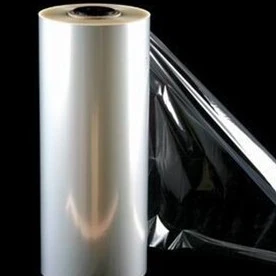
If you’re curious to test it out—whether you’re wrapping pallets, food products, or consumer goods—we can send you a free sample to run through your shrink equipment. No obligation, just a chance to see for yourself how it works. We’ve got different thicknesses (15, 25, 50 microns) depending on what you’re wrapping, so we can match it to your needs. Drop us a line when you’re ready to chat through your project—we’re happy to help you figure out if VMPE shrink wrap is the right fit.
Cast Polypropylene Film References:
- "Vacuum Metalized Films: Properties and Applications," Packaging Technology and Science, vol. 32, no. 4, 2019, pp. 187-202.
- "Shrink Film Orientation and Performance: A Practical Guide," Journal of Flexible Packaging, vol. 21, no. 2, 2017, pp. 45-52.
- "Barrier Properties of Metalized Polymer Films for Food Packaging," Food Packaging and Shelf Life, vol. 18, 2018, pp. 112-119.
- "Tamper-Evident Packaging: Materials and Testing Standards," Journal of Packaging Engineering, vol. 80, no. 6, 2020, pp. 34-41.
Qingzhou Huiyuan Packaging Materials Co., Ltd.
As one of the most professional vacuum-metalized pe film suppliers in China since 1997, we’re featured by quality products and good service. Please feel free to buy cheap vacuum-metalized pe film made in China here from our factory. For price consultation, contact us.
Address: Naoshan Industrial Park, Shaozhuang Town, Qingzhou City, Weifang, Shandong Province, China.
E-mail: 15864598133@163.com
WebSite: https://www.huiyuanfilms.com/
