If you’ve ever held a drone that suddenly feels warm mid-flight, or adjusted a small surgical robot joint that’s just a little too hot to touch after 10 minutes of use, you’ve felt the effect of unmanaged heat from a miniature brushless motor. As a supplier who’s worked with these motors for over seven years—hand-assembling prototypes for drone teams, medical device engineers, and even wearable tech startups—I can tell you that heat isn’t just a minor inconvenience here. For motors that measure less than 50mm in diameter, and often as small as 10mm or 15mm, their entire performance, lifespan, and even safety depend entirely on getting their heat dissipation right. Most engineers come to me asking for “a small motor with good torque” or “high speed for a drone,” and only after a few tests realize that the thing they overlooked is how that tiny motor will move the heat it generates. Let’s break down exactly what those heat dissipation requirements are, why they’re non-negotiable, and how we as a supplier approach this with our product line. Miniature Brushless Motor
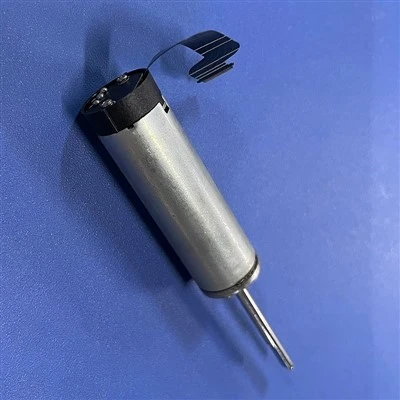
First, let’s ground this in how a miniature brushless motor actually makes heat in the first place. Unlike brushed motors, which have physical brushes that rub against a commutator and create friction heat, brushless motors generate heat from three main sources. The biggest one is copper loss: when electrical current passes through the thin copper windings wrapped around the stator, the metal’s resistance turns that electricity into heat. For a miniature motor, those windings are much thinner than in full-sized motors, and they’re packed tighter into a smaller space—so even a small current draw can spike the temperature quickly. The second source is iron loss, which comes from the alternating magnetic fields in the motor’s stator and rotor core. Those fields flip thousands of times per second at high speeds (which miniature motors often need to hit), and that rapid flipping creates tiny magnetic resistances that turn into heat. The third is friction loss, though in miniature brushless motors, this is negligible compared to the first two—only a factor when the motor is spinning at extreme RPM or has misaligned bearings.
Now, the heat dissipation requirement here isn’t just “cool it down.” It’s a balance between heat generation and heat removal, and the threshold is surprisingly low for these small motors. For most general-purpose miniature brushless motors used in things like camera gimbals or small electric valves, the maximum continuous operating temperature of the motor’s internal windings is around 120°C. Once that goes higher, the insulation on the copper windings starts to break down—slowly at first, but over a few hundred hours, it leads to short circuits and motor failure. For higher-stakes applications, like medical surgical robots or satellite components, that threshold drops even lower, to 80°C or 90°C, because those environments can’t risk a sudden motor failure mid-procedure or in space. That’s the baseline requirement: the motor’s internal temperature can never exceed its rated peak, no matter how hard it’s working.
But here’s the catch with miniature motors: their surface area to volume ratio is inverted compared to full-sized motors. A 100mm industrial motor has a lot of outer surface area to radiate heat into the air, but a 15mm miniature motor has almost no space for that. Let me do a quick math check here: a 50mm diameter motor has a surface area of roughly 7,850 mm², while a 15mm motor is only about 707 mm²—less than a tenth of the surface, even though its volume is a much smaller fraction. That means miniature motors can’t rely on passive radiation alone the way bigger motors do. Passive cooling—just letting the motor sit and dissipate heat through its casing—only works for very low-duty-cycle applications, like a motor that runs for 10 seconds at a time then rests for five minutes. For any motor that’s running continuously, or cycling on and off every minute, passive cooling isn’t enough.
So what are the specific requirements for different use cases, broken down by application? Let’s start with the biggest market for our miniature motors: consumer drones. A drone’s motor is running almost non-stop during flight, spinning at 10,000 to 20,000 RPM, and packed into a tiny frame where there’s barely air circulation. For a 2205-sized drone motor (about 22mm in diameter, 5mm in length), the heat dissipation requirement is to keep internal windings under 110°C during 10-minute continuous flights. To hit this, we design our drone motors with a thin, aluminum outer casing that’s exposed to the drone’s frame, which acts as a heat sink, and often add a small air gap between the motor and the frame so cool air can circulate around the casing. If we didn’t do this, the motor would hit 150°C in five minutes, and the insulation would start to degrade—leading to motor failure after 50 or 100 flights, compared to the 1,000+ flights our motors deliver.
Next, medical applications, which are the most demanding. A joint motor in a laparoscopic surgical robot is only 12mm in diameter, runs for hours during a procedure, and can’t exceed 80°C surface temperature (let alone internal winding temperature) because it’s touching human tissue. A motor that gets too hot can cause burns to the patient, which is a non-starter. For these motors, our heat dissipation requirements go beyond just the motor itself: we work with clients to integrate the motor directly into the device’s metal structure, so the motor’s heat is transferred into the device’s frame, which acts as a large heat sink. We also use higher-grade copper windings with lower resistance to reduce heat generation in the first place, and add a ceramic coating on the motor’s outer casing to improve thermal conductivity. I had a client last year who was testing a motor for a robotic arm that had a critical tolerance for heat; their first prototype used our standard motor and overheated to 105°C in 20 minutes, so we redesigned the stator to use a thicker iron core that could conduct heat better, and mounted it directly to their device’s titanium frame. The new design ran at 72°C for four hours straight, and they got FDA approval three months later.
Then there’s wearable tech, which is a growing segment for miniature motors. A motor inside a smartwatch or a hearing aid is tiny—often 8mm or smaller—and has to run for hours on a small battery. The heat requirement here is twofold: the motor can’t get so hot that it burns the user’s skin, so surface temperature has to stay under 45°C, and the motor has to dissipate heat without adding extra bulk. For these, we use molded plastic casings with embedded graphite flakes—graphite is a great thermal conductor, so it transfers heat away from the windings quickly, but it’s lighter than metal, which keeps the watch slim. We also limit the motor’s maximum continuous current draw, which reduces copper loss and keeps heat lower, since wearable motors don’t need the same peak torque as drone motors.
Now, it’s not just about active vs passive cooling. There are other design factors that affect heat dissipation for miniature brushless motors, and these are the things I spend the most time discussing with engineers when they reach out to us for custom or off-the-shelf motors. First, winding design: the number of turns, the gauge of wire, and the type of insulation all affect both heat generation and heat transfer. Thicker wire has less resistance, so it generates less heat, but it takes up more space, so we have to balance that with the motor’s torque requirements. For example, a motor designed for high torque at low speed needs more turns of thinner wire, which increases resistance and heat, so we have to use a higher-grade insulation that can handle higher temperatures, or add a better heat path out of the windings.
Another factor is the motor’s assembly process. Even two motors of the same size, made with the same parts, can have different heat dissipation if they’re assembled slightly differently. If the winding leads are too tight or too loose, that can create resistance and extra heat. If the stator isn’t aligned perfectly with the rotor, that creates drag, which leads to friction and extra heat. We test every batch of our miniature motors for thermal performance, running them at maximum load in a temperature-controlled chamber and measuring the internal winding temperature with a small thermocouple embedded during assembly. That’s a step most small suppliers skip, but for our customers, it’s the difference between a motor that works for 1,000 hours and one that dies after 100.
Common mistakes I see engineers making with miniature motor heat dissipation are pretty consistent. The first is assuming that a motor’s “rated power” includes heat management, so they just pick the smallest motor that can hit their torque and speed targets, without accounting for how that motor will get rid of heat. I had a robotics engineer come to me last year who had spent months designing a small humanoid robot hand, using off-the-shelf miniature motors that he ordered from a different supplier. The hands would work for five minutes, then lock up because the motors overheated. When he tested them, he saw they were running at 140°C, which was way over their rated temperature. The supplier had listed the motor’s power output, but hadn’t mentioned that that power was only sustainable for 30 seconds at a time, not continuous use. We worked with him to select a slightly larger motor (only 2mm bigger in diameter) with optimized windings and a heat-conductive casing, and after adjusting the robot’s control software to limit peak current, the hands ran for two hours straight with internal temperatures under 105°C.
The second common mistake is not accounting for the operating environment. A motor that works fine in an air-conditioned office will overheat if it’s used in a desert environment where ambient temperature is 40°C, or in a sealed enclosure where there’s no air circulation. For example, a motor used in a underwater ROV’s thruster has to handle both the motor’s heat and the ambient water temperature, and water is actually a much better heat conductor than air, so that can work to the motor’s advantage—we can design the motor’s casing to be exposed to the water, and it will dissipate heat much faster than a motor in air. But in a sealed device like a smartwatch, there’s no air flow, so we have to rely on the device’s frame to move the heat away. That’s why we always ask our customers for full details on their application: ambient temperature, duty cycle, enclosure design, and required lifespan, before we even recommend a motor.
As a miniature brushless motor supplier, our goal isn’t just to sell a motor—it’s to make sure that motor works reliably in their specific use case. That means heat dissipation isn’t an afterthought; it’s part of the design process from the first conversation. We offer both off-the-shelf motors with standardized cooling designs for common applications, and custom motors tailored to clients’ unique needs. For anyone working on a project that uses a miniature brushless motor, whether it’s a drone, a medical device, a wearable, or a robot, getting the heat dissipation right is the difference between a product that works well and one that has a critical failure down the line.
If you’re working on a project and need a miniature brushless motor that meets your specific heat dissipation requirements, or if you’re having issues with overheating in your current motor, we’re here to help. We’ve worked with hundreds of engineers and product teams to design motors that balance performance, size, and thermal reliability, and we can help you find or build the right solution for your needs. Contact us to discuss your project details and get a recommendation tailored to your application.
Personal Care Brushless Motor References
- Miller, T.J.E. (2008). Brushless Permanent-Magnet and Reluctance Motor Drives. Oxford University Press.
- Bose, B.K. (2006). Power Electronics and Motor Drives: Advances and Trends. Academic Press.
- Zhang, Y., et al. (2021). Thermal Modeling and Analysis of Miniature Brushless DC Motors for Wearable Applications. IEEE Transactions on Industrial Electronics, vol. 68, no. 12, pp. 12145-12154.
- Underwriters Laboratories (UL 1004-1). Standard for Safety for Rotating Electrical Machines, Part 1: General Requirements.
Shenzhen HengDrive Technologies Co., Ltd.
Shenzhen HengDrive Technologies Co., Ltd. is one of the most professional miniature brushless motor manufacturers and suppliers in China, specialized in providing high quality customized service. We warmly welcome you to buy the newest miniature brushless motor in stock here from our factory.
Address: Building A & F, FuNing Hi-Tech Park, XinTian Road, FuHai Street, BaoAn District, ShenZhen, GuangDong Province, China.
E-mail: Marketing001@hengdrive.com
WebSite: https://www.hengdrivemotor.com/
