Hey there, if you’ve ever priced out stainless steel railings for a deck, balcony, or even a commercial stairwell, you’ve probably googled “standard thickness for stainless steel railings” way more times than you’d admit. I know I have—back when I started out running this stainless steel railing supplier, I messed up so many quotes because I relied on random forum answers and not actual, real-world industry specs. Today, I’m breaking this down like I’m chatting with a buddy, no stuffy engineering jargon that makes your eyes cross, and no fake “one size fits all” garbage you see on other sites. Stainless Steel Railing
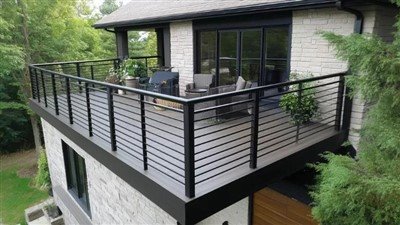
First off, let’s get one thing straight: there’s no single “one standard thickness” that works for every railing. That’s the first mistake most contractors and DIYers make—they see a generic number online and buy that exact gauge, only to find it’s too thin for a second-floor balcony or way overkill for a tiny apartment railing. The actual “standard” depends on three big things: where you’re installing it (residential vs. commercial), how much load it has to hold, and what code your area’s building department enforces. I’ve spent 12 years in this game, and I’ve lost count of projects where someone cut corners on thickness and got shut down by inspectors. Not fun.
Let’s start with the basics people actually want to know: gauge vs. thickness. A lot of folks mix these up, and it drives me nuts. Gauge is the old-school way metal thickness was measured, but it’s backwards—higher gauge means thinner metal, like how a 20-gauge sheet is skinnier than 16-gauge. For stainless steel railings, gauge numbers usually range from 18 (super thin, like a soda can) to 10 (thick, like a dinner plate edge), but we’ll talk real, usable numbers here, not the extremes.
Now, the core stuff: residential railings. If this is for your backyard deck, a second-floor porch, or your apartment’s balcony, most residential building codes (I’m talking US, since that’s where I’m based, but most of Europe and Canada have similar rules) lock in a minimum thickness for structural members. For the main vertical posts (the ones holding everything up, not the infill like glass or cables), the standard minimum is 1.9mm (0.075 inches) for residential. Wait, but don’t confuse posts with the horizontal top and bottom rails. Top rails are what you grip when you lean on them, right? For residential, that needs to be at least 1.5mm (0.059 inches) thick, and bottom rails (if you have them) are usually the same or a tiny bit thinner, like 1.2mm (0.047 inches), since they don’t get leaned on as much.
But here’s the catch: that minimum is just the code floor. If you live in a windy area (Florida, Gulf Coast, Plains states) or have a big deck with multiple people hanging out at once, you need to go thicker. I recently had a customer in Miami who tried to cut costs on 1.5mm top rails for their rooftop deck—turns out coastal wind loads are way higher than inland, and the inspector made them upgrade to 2.0mm. That’s the difference between a compliant railing and a disaster waiting to happen.
Now, commercial railings are a whole different ballgame, and this is where most first-timers go wrong. Commercial spaces—think office building stairwells, restaurant balconies, apartment building common areas—have way stricter load and safety codes. OSHA (Occupational Safety and Health Administration) in the US has hard rules here, and they don’t mess around. For commercial posts, the minimum is 2.4mm (0.095 inches) thick, no exceptions. Top rails for commercial need to be 2.0mm (0.079 inches) minimum, because you’ve got more foot traffic, more people leaning, and way higher liability if something goes wrong. I see a lot of cheap suppliers trying to pass off residential 1.5mm top rails as commercial, and that’s a quick way to get a lawsuit (or a bad review from a general contractor who got shut down by OSHA).
Wait, what about infill? The part that fills the gap between the rails—glass, cables, pickets—does that have its own thickness rules? Yeah, but it’s tied to the overall railing system, not just the infill itself. For cable infill (super popular for modern decks), each cable should be at least 3.2mm (1/8 inch) thick, per most residential and commercial codes. Glass infill is usually 10mm tempered, but that’s glass, not stainless steel, so I’ll stick to steel here. Picket infill (the vertical metal bars between rails) is usually 1.2mm (0.047 inches) for residential, 1.5mm (0.059 inches) for commercial.
But let’s talk about the stuff that doesn’t show up on code sheets: durability and cost. I run a stainless steel railing supplier, so I’m not trying to sell you on a $5000 railing for a $500 deck, but I’ve seen way too many people go with the absolute minimum just to save a buck, only to have their railing rust or bend in 5 years. Stainless steel grades matter too, right? 304 stainless is the standard for most places, but if you’re near saltwater (coastal areas, near swimming pools, where road salt is used in winter), you need 316 stainless, which is more corrosion-resistant. But here’s the thing: even 316 stainless has its own minimum thickness rules. For coastal applications, I always bump up post thickness by 0.3mm just to be safe—salt is brutal on thin metal, and you don’t want your railing pitting after 2 years.
Wait, let’s get specific with numbers, no more vague mm and inches that no one can picture. Let’s translate this to real life:
- Residential post minimum: ~2mm thick (that’s like the thickness of a standard pencil eraser, if that helps)
- Commercial post minimum: ~2.4mm thick (a tiny bit thicker, like two stacked quarters side by side)
- Residential top rail: ~1.5mm (thinner, like a dime’s edge)
- Commercial top rail: ~2mm (a penny’s edge)
- Cable infill: 3.2mm (that’s the thickness of a standard guitar string, for reference)
But here’s a secret I don’t tell every supplier: some areas have their own extra rules. For example, in Chicago, building code requires balcony railings over 3 feet high to have posts that are at least 2.5mm thick, even if it’s residential. In New York City, they require all exterior railings to be 304 or 316 stainless, no cheaper 201 grade (which is thinner and less corrosion-resistant). The worst part? A lot of small suppliers don’t keep up with local code changes, so they sell you something that’s technically “standard” nationwide, but illegal for your city. I once had a customer from Boston who bought a railing from a big-box store that was 1.5mm top rail, and Boston’s code requires 2mm for exterior railings—they had to tear it all out and buy ours, which was way more of a hassle than just getting the right stuff first.
Another thing people ask: what about custom railings? If you’re getting a custom curved railing for a loft or a glass wall, does the thickness change? Yep. When you bend stainless steel, it gets a little weaker at the bend, so you need to go 0.3mm thicker for bent sections. I learned that the hard way on a custom project for a artist’s loft in Brooklyn—we used 1.5mm top rail, bent it, and when we tested the load, it bent at the bend. Had to remake it with 1.8mm, and the customer almost lost their space because of the delay. Lesson learned: custom = thicker.
Now, let’s bust a myth: “thicker is always better.” No, not really. If you’re doing a tiny apartment balcony railing, 2.5mm posts would be overkill, and they’d look clunky. The whole point of stainless steel railings is that they’re sleek, modern, and not bulky. So matching the thickness to the application is key—you don’t want a thick, industrial-looking railing on a tiny urban balcony, and you don’t want a flimsy residential railing on a commercial building.
Wait, also, what about horizontal rail systems, like ones that run along a wall instead of having posts? Same rules apply, but since they’re supported by the wall, you can go a tiny bit thinner—like 1.2mm top rail for residential wall-mounted, but I still recommend 1.5mm to avoid bending. I’ve had a few customers who skipped that and ended up with a wobbly rail that looks like it’s going to fall off.
Let’s recap all this, because it’s easy to get lost:
- No universal standard thickness—depends on location, use, code, and environment.
- Residential: posts = min 1.9mm (0.075”), top rails = min 1.5mm (0.059”). Go thicker for windy/coastal areas.
- Commercial: posts = min 2.4mm (0.095”), top rails = min 2.0mm (0.079”). Non-negotiable for OSHA compliance.
- Custom, bent, or coastal applications: add 0.3mm to all sections for safety and durability.
- Avoid 201 stainless if it’s exterior—201 is thinner, cheaper, and rusts easily. Stick to 304 or 316.
Now, if you’re in the middle of planning a railing project, don’t guess. A lot of people Google this, pick a number, and run with it, but that’s how you end up with a railing that’s either illegal, flimsy, or way more expensive than it needs to be. I’ve worked with homeowners, general contractors, architects, even DIYers, and the biggest mistake people make is not asking a local supplier (that’s me, btw) about the specific codes for their area. I know this sounds like a sales pitch, but it’s true—code changes, wind loads, salt levels, even how much weight people will put on the railing (I had a customer who wanted a railing for a fire pit area, so we bumped thickness to 2.5mm because people lean on it while roasting s’mores) all matter.
If you’re tired of dealing with generic answers about stainless steel railing thickness, and you want something that’s compliant, durable, and fits your project’s style, hit me up. I don’t do pushy sales stuff—just straight talk, actual spec sheets, and help figuring out exactly what thickness you need without paying for extra you don’t need. Whether it’s a tiny apartment balcony or a 10-story commercial building, I’ve got the experience to get it right the first time.
For more details on industry specs, building codes, and stainless steel railing standards, check out the references below.
Stainless Steel Railing References:
- International Code Council (ICC) – International Residential Code (IRC) 2021, Chapter 10: Means of of Egress
- Occupational Safety and Health Administration (OSHA) – 29 CFR 1910.23: Guardrail Systems
- Stainless Steel Industry Association (SSIA) – 2022 Spec Guide for Structural Stainless Steel Applications
- National Association of Home Builders (NAHB) – Residential Railing Safety and Design Guidelines
ZP Aluminum Co., Ltd.
ZP Aluminum Co., Ltd. is one of the most professional stainless steel railing manufacturers and suppliers in China. With abundant experience, we warmly welcome you to wholesale customized stainless steel railing made in China here from our factory. If you have any enquiry about quotation, please feel free to email us.
Address: LEPING INDUSTRIAL ZONE, SANSHUI DISTRICT, FOSHAN, GUANGDONG, CHINA
E-mail: general@zp-aluminum.com
WebSite: https://www.zp-railing.com/
