If you’ve ever crawled under the dashboard of a car, popped the hood on a cold morning, or stared at the tangled wiring harnesses that snake through electric vehicle battery packs, you’ve probably never thought twice about the tiny, plastic-and-metal parts holding it all together: automotive connectors. But as a connector supplier who’s spent the last 12 years working with OE manufacturers, tier 1 automotive suppliers, and custom EV startup teams, I can tell you that what looks like a simple plug-and-socket design is one of the most critical components in modern vehicles. A single faulty connector can trigger a recall, knock out a whole infotainment system, or—worse—cause an EV battery to fail mid-drive. That’s why packaging for these parts isn’t just about putting them in a box and shipping them. It’s about protecting years of engineering, keeping production lines moving, and helping customers avoid costly, reputation-damaging mistakes. Automotive Connector
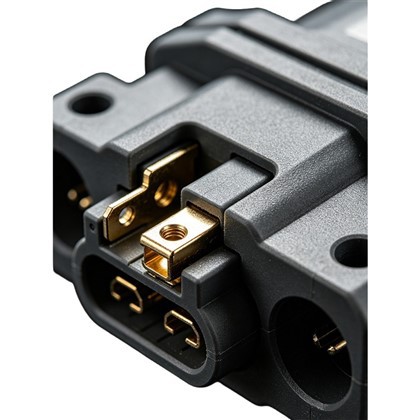
When I first started in this industry, we’d just toss bulk connectors into cardboard bins and ship them via standard freight. Back then, most connectors were for older gas-powered cars, with fewer pin counts and lower voltage ratings. If a few got bent or scuffed on the way to the assembly plant, a quick filing or tweak on the line fixed the problem. But over the last decade, the entire automotive landscape has shifted. EVs now make up 8% of new car sales in the U.S. alone, and each EV has 2 to 3 times more connectors than a gas car—many rated for 400V or 800V, with 100+ tiny pins meant to carry power, data, and signals between the battery, motor, and infotainment. Those pins can bend if jostled. The plastic housings can crack if they rub against each other. Even a speck of dust on a contact surface can cause a signal drop that leads to a misdiagnostic code. That’s why we’ve built a whole suite of packaging solutions tailored specifically to automotive connectors, and it’s something I walk through with every new customer that comes to us worried about part damage on the line.
Let’s start with the most common option, and the one we recommend for most high-volume production runs: custom rigid trayed packaging. I know, trays sound basic, but not all trays are created equal for connectors. We don’t use generic plastic trays from the industrial supply store. Our trays are injection-molded to the exact dimensions of each connector model—whether it’s a 2-pin sensor connector for a brake line or a 128-pin high-voltage connector for a battery management system. Each cavity in the tray has a precision-fit pocket that holds the connector snugly, with soft, static-dissipative plastic that doesn’t scratch or scuff the part’s surface. Most connectors are static-sensitive, right? Modern semiconductors and contact pins can be damaged by even a tiny electrostatic discharge (ESD)—something a person wouldn’t feel, but that would kill a $5 connector. All our rigid trays are classified as ESD-compliant, meaning they dissipate static at a rate that’s safe for electronic components.
The other big win with rigid trays is line efficiency. When a customer is running a production line that’s turning out 500 cars an hour, no one has time to pick individual connectors out of a bin. Our trays are stacked in specialty steel racks that fit perfectly into the customer’s line feeders, so a line operator can slide a whole tray in and grab a connector in seconds, no fumbling. For example, last year we worked with a tier 1 supplier in Detroit that makes connectors for a popular full-size pickup truck. They used to get bulk bins that required two line workers just to unload and sort parts, and they had a 0.2% damage rate from bent pins. Since switching to our custom rigid trays, they cut part damage to 0.01% and reduced line labor for connector handling by 40%. It’s not just about protection—it’s about the cost savings that come from keeping a line moving and reducing scrap.
But rigid trays aren’t the right fit for every scenario. Sometimes a customer is building a low-volume prototype for a new EV model, or a small custom vehicle maker only needs 50 of a specific connector, not 5,000. For those cases, we use flexible ESD tote bags or static-shielding packaging kits. Wait, I know what you’re thinking—bags sound like they would be too flimsy, but we use industrial-grade static-shielded polyethylene that’s puncture-resistant and tear-proof. We line each bag with a thin layer of conductive mesh that blocks ESD, and we add custom foam inserts that cradle the connectors, keeping them from shifting during shipping. For prototypes, we even label each connector with its part number and pinout, so the engineering team doesn’t have to waste time sorting through loose parts. I always tell my prototype customers that this packaging keeps their parts clean and undamaged until they get to the test track, where there’s no room for a faulty connector to slow down their testing timeline.
Another option we’ve expanded into over the last five years is tape-and-reel packaging, which is the go-to for surface-mount connectors (SMCs) and high-speed data connectors. If you’ve ever seen a reel of tiny electronic parts, that’s tape-and-reel. But for automotive use, it’s not the consumer-grade tape-and-reel you see in electronics stores. Our automotive-grade tape-and-reel is designed to work with automated pick-and-place machines, which are used to install connectors on PCBs for infotainment systems, ADAS sensors, and EV control modules. Each tape has precision pockets spaced exactly 4mm apart, the standard for automotive pick-and-place equipment, so the machine can pick up a connector and place it on a PCB in under a second. The reel is 13 inches in diameter, the standard size for automotive production lines, so it fits perfectly into the feeders on assembly machines. We also print a scannable QR code on the reel that has the part number, lot number, and expiration date of the connector—critical for traceability, which is non-negotiable in the automotive industry. When a recall happens, manufacturers need to be able to track exactly which parts went into which vehicle, and tape-and-reel makes that tracking seamless. We recently did a run of 100,000 high-speed data connectors for a new luxury EV brand, and they switched from their previous supplier’s tape-and-reel because our reel’s static dissipation was 10x more consistent, leading to zero line stops due to static damage during installation.
Wait, let’s talk about a less obvious, but increasingly important, packaging need: harsh environment transportation. A lot of our customers ship parts to Mexico, or to Southeast Asia, where temperatures can swing from 100°F+ in the desert to near-freezing at night, and humidity is often very high. Connectors can absorb moisture during shipping, and if that moisture gets trapped inside the housing, it can cause corrosion over time, especially for high-voltage connectors. For these shipments, we use vacuum-sealed, desiccant-packed barrier bags. Each bag has a multi-layer structure that blocks moisture, oxygen, and light, and we include integrated desiccant packets that absorb any moisture that might get trapped during sealing. We also label each bag with a moisture barrier expiration date, so customers know exactly how long the packaging will protect the connectors from humidity. Last winter, we had a customer shipping connectors for a heavy-duty truck model to a plant in northern Canada, where the average temperature during the winter is -20°F. The previous year, their bulk-shipped parts had 0.5% corrosion damage due to moisture condensation during transport. Since switching to our vacuum-sealed moisture-barrier packaging, they’ve had zero corrosion issues, even after 2-week shipments in freezing conditions. That kind of reliability is what keeps customers coming back.
I should also mention our custom anti-tamper packaging for parts that are only approved for specific production runs. With parts that are critical for ADAS systems or battery packs, manufacturers can’t have unauthorized third-party connectors mixed into their production line. So we offer tamper-evident packaging for certain high-value parts, with unique serial numbers for each package that matches the lot number of the connector inside. That way, if a package is opened before it reaches the production line, the customer knows right away, and we can immediately replace it. It’s an extra layer of security that goes beyond just protection, and it’s become a huge selling point as supply chain security has become a major concern for automakers in recent years.
A lot of people ask me why packaging is such a big deal. They say, “It’s just a box, why does it matter?” But I’ve seen what happens when packaging goes wrong. A customer of ours had a shipment of ADAS camera connectors arrive with bent pins because the generic cardboard boxes they used got dropped at a warehouse, leading to a $200,000 production line stop and a missed delivery deadline for a new model. Another customer had a batch of high-voltage battery connectors that got damaged by ESD because they used plastic bags that didn’t have the right static-dissipative properties, leading to a recall of 5,000 EVs when the fault was found. That’s the kind of cost that a good packaging solution prevents. Our job isn’t just to sell connectors—it’s to make sure those connectors arrive at the customer’s line exactly as we designed them, ready to be installed without any delays, damage, or extra work.
If you’re a procurement manager at an automaker, a tier 1 supplier, or a custom vehicle builder, and you’re tired of dealing with damaged parts, line stops, or traceability headaches, we can help. We work with you to assess your specific needs: whether you’re running high-volume production that needs automated packaging, building prototypes that need flexible solutions, shipping parts to harsh environments that need moisture protection, or needing traceability and tamper security for critical components. We’ll walk you through the options, adjust the packaging to fit your exact parts and processes, and make sure you get reliable, damage-free shipments every time. Whether you need 50 prototype connectors or 500,000 high-voltage battery connectors, our packaging solutions are tailored to keep your operations running smoothly. Reach out to our team to discuss your connector packaging needs, and we’ll put together a customized plan that works for your production and timeline.
References
Industrial Connectors Automotive Industry Action Group (AIAG) BX-3: Packaging, Handling, Shipping, and Storage of Automotive Parts and Materials, 2021
IPC JEDEC J-STD-020: Moisture/Reflow Sensitivity Classification for Nonhermetic Solid State Surface Mount Devices, 2020
International Organization for Standardization (ISO) 16750: Road vehicles – Environmental conditions and testing for electrical and electronic equipment, 2018
Modelon Precision Industry (Suzhou) Co., Ltd.
With abundant experience, we are one of the most professional automotive connector manufacturers and suppliers in China. Welcome to buy customized automotive connector at competitive price from our factory. If you have any enquiry about pricelist, please feel free to email us.
Address: 1st Floor, Building 22, No. 2628 North Gate Road, Kunshan City, Jiangsu Province, P.R.China
E-mail: jessica_huang2025@163.com
WebSite: https://www.modeloncn.com/
