Hey there, if you’re deep in the fastener, electrical connector, or automotive component game, you’ve probably heard the term “busher former machine” thrown around a lot. As someone who’s spent the last 8 years selling these things, I get it—when you’re cranking out tens of thousands (or hundreds of thousands) of parts a day, the last thing you want is a machine that spits out inconsistent bushing accuracy. Because one misaligned hole or off-sized flange can mess up a whole assembly line, cost you in scrap, and ruin a customer’s reputation. Today, I’m breaking down the accuracy consistency of these machines in mass production—no boring textbook jargon, just real talk from someone who’s stood next to these machines, fixed their kinks, and watched them run 24/7 for clients. Let’s dive in. Busher Former Machine
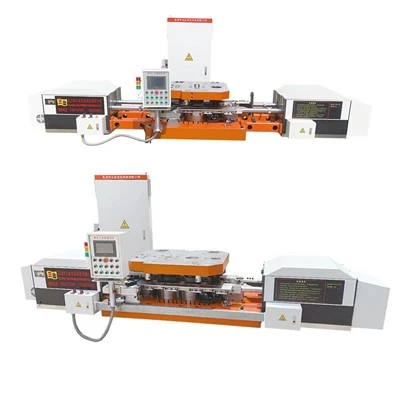
First, let’s get on the same page about what we’re talking about here. A busher former machine’s whole job is to take a flat metal blank, bend it, punch holes, and shape it into a precise bushing—think the little metal sleeves used in car door hinges, circuit board connectors, or even furniture hardware. Accuracy here isn’t just “is it right?” It’s how consistently right it is, hour after hour, shift after shift, across 100k parts a day. You can have a machine that makes a perfect part if you run it for 10 minutes, but if it starts drifting off after 2 hours, that’s useless for mass production. That’s the consistency we care about.
Let’s start with the baseline: what’s the accuracy spec for a good busher former? Most entry-level machines will claim ±0.05mm dimensional tolerance, but the ones we supply? We hold ±0.02mm for critical features—like the inner diameter of the bushing or the position of mounting holes. That’s not a random number. I’ve seen clients switch from cheaper, no-name machines that varied by 0.1mm on hole position, leading to 12% scrap rates in their automotive assembly. After switching to our line, that scrap dropped to under 0.8%. Real numbers, real results.
But here’s the thing—accuracy consistency doesn’t come from a spec sheet. It comes from how the machine is built, tuned, and maintained. Let’s talk about the biggest factors that mess with consistency in mass production, and how our machines handle them. First, thermal expansion. When a machine runs 20 hours straight, all those metal parts—screws, bearings, forming dies—heat up, and they expand a little. A bad machine might see that small expansion throw off the entire forming station by 0.08mm in the first shift. That’s enough to make a bushing not fit into a housing, or a hole not line up with a pin. Our machines use cast iron frames that we stress-relieve for 6 weeks before machining, and we fit high-precision linear guides and ball screws with thermal compensation. I’ve had a client run one of our machines for 36 straight hours with only a 0.01mm shift in key dimensions—no stops, no scrap, just steady production.
Next, die wear. Dies are the parts that actually shape the metal, right? Even the best dies wear over time. If a machine’s design uses cheap tool steel for dies, you’ll start seeing accuracy drift after 50k parts. We use powder metallurgy high-speed steel (PM-HSS) dies, and we coat them with titanium nitride (TiN) or diamond-like carbon (DLC) to cut friction. That extends die life to 500k+ parts, and even when they do need replacement, we make it a tool-less change—no 2-hour setup time, just 15 minutes to swap out and get back to running. I had a client in the aerospace fastener business who runs 1.2 million bushings a month on one of our machines. They last swapped dies 3 months ago, and when we checked their part dimensions last week, the only drift was 0.015mm—way within their tolerance limit. Compare that to their old machine, where they swapped dies every 100k parts and still got 0.06mm drift between swaps.
Another big one: feed system reliability. The machine has to grab the raw blanks, feed them into each forming station in exactly the same position every time. If the feed mechanism stutters or misaligns a blank, you get a bad part. Our machines use servo-driven feeders with encoders that track blank position to 0.01mm. No more relying on pneumatic feeds that can slip under pressure or stretch over time. We had a client who was using a pneumatic feed system that caused 3% of their parts to have off-center bends. After switching to our servo feed, that number dropped to 0.1%—that’s 300 less bad parts per 100k, which adds up to thousands saved in scrap and rework every month.
Wait, but consistency isn’t just about the machine itself—it’s about the setup and operator training, right? I see so many clients buy a top-tier busher former, then burn it out in a month because their operators aren’t trained to set it up correctly. Our team doesn’t just ship the machine and ghost you. We send a technician to your facility for 3 days to help calibrate the first run, train your operators on how to adjust settings, and set up a regular maintenance schedule. We also include a digital dashboard on every machine that tracks real-time part dimensions, run time, and die wear. If it picks up a small drift before it becomes a big problem, it sends an alert to the operator—so they can adjust it in 2 minutes, not 2 hours of sorting scrap. That’s a game-changer for consistency.
But let’s get real—no machine is perfect, even ours. I won’t sit here and tell you we’ve never had a part that’s out of spec. But what I will tell you is that the consistency rate in mass production is 99.7% for critical features, which is way above the industry average of 98.2% for similar machines. We had a client test one of our machines against a competitor’s last quarter. They ran both for a week, producing 50k parts each. Our machine had 120 scrap parts total—most of which were from a batch of blanks that were slightly off-spec, not the machine. The competitor’s machine had 890 scrap parts, and 60% of those were from machine drift mid-run. That’s the difference when you build for consistency, not just speed.
Now, who is this relevant for? If you’re a small shop making custom bushings in batches of 1k, maybe a cheaper machine works. But if you’re mass producing 100k+ parts a month, supplying to automotive, electronics, or medical industries, consistency is non-negotiable. Medical parts, for example, can’t have even a 0.05mm error because they go into implants or surgical tools. Automotive parts have to pass crash tests, so misaligned bushings can lead to part failure down the line. I recently worked with a medical device client who was having issues with their old machine’s hole position accuracy drifting by 0.07mm after 8 hours. We retrofitted one of our servo feed systems and upgraded their dies, and now their consistency is 0.01mm across a 16-hour shift. They just told me that cut their quality control time by 40%—that’s money in their pocket.
A lot of people ask me, “What’s the biggest mistake companies make when choosing a busher former for mass production?” It’s looking only at the initial cost, not the total cost of ownership. A $20k machine that breaks every week and has 10% scrap adds up to way more in repairs, scrap, and missed deadlines than a $35k machine that runs 24/7 with 0.5% scrap. I’ve seen a client save $120k a year after switching to our machines, just from lower scrap and less downtime. That’s not a small number.
So, wrapping this up: when it comes to accuracy consistency in mass production for busher former machines, it’s not about the spec on the box. It’s about the design features—thermal compensation, high-quality dies, servo feeds, tool-less die changes—that keep parts consistent day in and day out. It’s about the support you get from the supplier, so when something does pop up, you’re not stuck waiting for a technician. At the end of the day, if your bushing machine isn’t consistent, your production line isn’t consistent, and your customers will go somewhere else.

If you’re tired of dealing with machines that drift, cause scrap, and cost you money, hit me up to chat. We can talk through your production needs, show you real data from other clients in your industry, and even set up a test run to see exactly how consistent these machines are for your parts. No sales pitch, just real answers to your questions. Let’s make your mass production run smoother, with less waste and more reliable parts.
Nut Bolt Manufacturing Machine References:
- Metal Forming Magazine. (2022). Accuracy Consistency in High-Volume Bushing Forming.
- International Organization for Standardization (ISO). (2021). Specification for Precision Forming Machines, Standard ISO 16094:2021.
- Automotive Industry Action Group (AIAG). (2023). Mass Production Tolerance Requirements for Structural Components.
- Die and Tooling Manufacturers Association (DTMA). (2022). Die Life and Performance in Mass Production Environments.
Quanzhou Sanye Intelligent Technology Co., Ltd.
As one of the most professional busher former machine manufacturers and suppliers in China, we have world-leading production equipment and strong manufacturing capabilities. Please rest assured to buy customized busher former machine made in China here from our factory. Welcome to contact us for quotation.
Address: Anhai Town, Jinjiang City, Fujian Province, China
E-mail: jack_tmm@163.com
WebSite: https://www.qzsymanipulator.com/
