If you’ve ever owned a BMW, you’ve probably gripped the steering wheel while coming down a mountain pass, pressing the brake pedal harder than usual, and glanced down at the rotor through the wheel spokes—wondering why that silver disc you see when you polish your rims is now glowing faintly, or at least blistering hot to the touch after you park. As someone who’s spent the last 12 years supplying brake rotors specifically for BMW models, I get that question all the time, not just from customers who call our line upset that their $50k sedan’s parts are overheating, but even from fellow mechanics who’ve worked on Bimmers for decades. Let’s break this down plainly, no stuffy engineering jargon that makes your eyes glaze over, and tie it all back to how BMW builds its brakes (and why our rotors are engineered to handle that heat better than generic parts). Brake Rotors for BMW
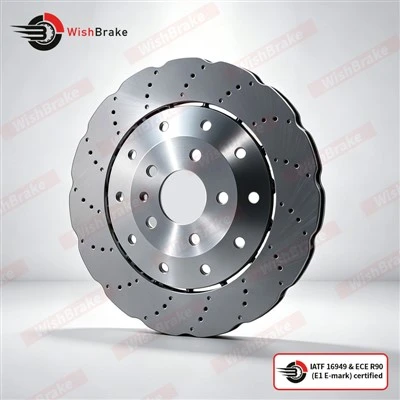
First, let’s stop with the myth that this is “a problem” unique to BMW. Every car’s brake rotors get hot when you use them—heat is the entire point of brakes, after all. Brakes work by friction: when you press the pedal, hydraulic fluid pushes brake pads against the rotor’s surface. That friction converts your car’s kinetic energy (the energy of moving forward) into thermal energy, AKA heat. For a BMW 3 Series cruising at 60 mph, that can create enough heat to push the rotor surface to 600 degrees Fahrenheit in a single hard stop. When you’re driving your BMW as it was designed—commuting, merging onto the highway, or even tackling a winding back road—this is normal, temporary heat. The rotor’s job is to dissipate that heat fast, either through its metal composition, the vented gap between its two faces, and its surface area. Where BMW-specific heat issues pop up, though, boils down to two things: how BMW engineers its brake systems, and how many people grab any cheap off-the-shelf rotor and wonder why it doesn’t match their Bimmer’s performance.
Let’s start with BMW’s own brake design, because that’s the foundation. Unlike economy cars that skimp on vented rotors and thin metal to cut costs, most BMW models even base trims use vented brake rotors. A vented rotor isn’t just a solid disc—it has a hollow channel between its two friction faces, and when the rotor spins (which it’s doing thousands of times a minute at highway speed), air rushes through that channel to carry heat away. BMW engineers calculate the exact depth of that vented gap, the thickness of the rotor, and the metal alloy to match the weight and power of the car. A BMW X5, for example, is a heavy SUV with plenty of torque, so its front rotors are thicker and have a wider vented gap than a 2 Series coupe. That’s why if you swap in a cheap non-vented rotor for your X5, it won’t move enough air to dissipate heat, and it’ll overheat fast even during normal stops.
But there’s more to it than just design. BMW’s brake pads are engineered for their brakes, too. BMW uses high-friction, heat-resistant pads (even on standard trims) that are meant to work with the exact surface finish and hardness of their factory rotors. If you put a cheap semi-metallic pad on your BMW, it can create extra friction that generates more heat than the system was designed for. Worse, those cheap pads can wear unevenly, leaving “hot spots” on the rotor—small, hardened areas where friction is concentrated, which makes the entire disc run hotter than it should. I’ve had customers call us panicking because their rotor warped after a month, only to find they’d used a generic pad set that didn’t match their BMW’s brake caliper pressure, leading to a drag on the rotor that kept it hot even when they weren’t braking.
Another big one: driving style. BMWs are often driven by people who enjoy performance—whether that’s fast highway merges, back road runs, or even track days. When you brake repeatedly, like coming down a steep mountain grade where you’re tapping the brakes every few seconds, that’s called “brake fade” risk, and it’s caused by the rotor getting too hot. When the rotor’s surface hits 800 degrees or more, the pad’s material can start to glaze over (creating a slippery layer that reduces stopping power) and the rotor itself can expand unevenly, leading to that pulsating feel when you press the pedal. For a BMW that’s built for fun, this is a common scenario, not a flaw—your factory rotors are designed to handle this, but if you’re running a thin, generic aftermarket rotor, they can’t keep up. I once had a customer with a BMW M3 who showed up with warped rotors after a weekend track day; he’d bought a $100 aftermarket rotor that was half the thickness of our performance BMW-specific rotors, and it couldn’t dissipate the repeated track heat fast enough.
Wait, but what about when your BMW’s rotor gets hot even when you’re just sitting in traffic? That’s a different issue, and it usually ties to wear or misalignment, not normal use. If your brake caliper is stuck (from old, dirty brake fluid that’s corroded the caliper piston), the pad stays pressed against the rotor even when you’re not braking. That constant, low-level friction will heat the rotor up until it’s hot enough to burn your hand if you touch it after a 10-minute stop-and-go commute. That’s not the rotor’s fault—that’s a maintenance issue that our team often helps customers diagnose over the phone, even before they ask about new rotors.
Now, as a supplier who only makes brake rotors for BMW models, let’s get specific about why our parts solve a lot of the heat problems customers run into. We don’t use universal alloy or one-size-fits-all dimensions. For every model—from the base 1 Series to the high-performance M5, even the electric iX—we match the rotor’s vented gap, thickness, and alloy exactly to BMW’s factory specs. For example, our rotors for the BMW 330i have a vented gap of 15mm, the same as BMW’s original, which means air flows through at the same rate to carry heat away. We also use a high-carbon alloy that’s harder than generic rotors, so it resists warping from repeated heat exposure, even during track days or mountain driving. Generic rotors often use low-carbon steel that softens at high temperatures, which means they can’t dissipate heat as well and start to fail faster.
Another thing we do is machine the rotor’s surface to match BMW’s factory roughness. If a rotor’s surface is too smooth, the brake pad can’t grip properly, leading to more friction that creates extra heat. If it’s too rough, the pad wears out faster, and the two parts grind each other unevenly, creating hot spots. Our CNC machines set the surface finish to a perfect 16 micro-inches, which is exactly what BMW engineers tested to balance stopping power and heat management. I’ve had customers swap from cheap generic rotors to ours and tell me their brakes run 100 to 150 degrees cooler during hard stops— that’s a huge difference for preventing warping, glaze, and premature wear.
Let’s also talk about electric BMWs, because that’s a whole new area that a lot of people don’t realize affects rotor heat. BMW’s i4 and iX, for example, use regenerative braking most of the time—instead of using the friction brakes to slow down, the car sends power back to the battery. That means drivers barely touch the brake pedal most of the time, but when they do hit the friction brakes to stop completely, the rotors have to handle all the deceleration suddenly. A lot of electric BMW owners complain about their rotors overheating after a single hard stop, and that’s because generic rotors aren’t built to handle that sudden, high heat load. Our electric BMW-specific rotors have a thicker outer friction surface and a larger vented gap to handle that one-time hard stop heat, so you won’t end up with a warped rotor after a trip down the highway to visit family.
I won’t sugarcoat it: heat is inevitable for any brake rotor that works as it should. That’s not a flaw in your BMW—it’s how brakes are supposed to work. But when your rotor is running too hot, that’s almost always a mismatch between your parts and your BMW’s design, or a maintenance issue you can fix before it leads to more expensive problems like brake lines or calipers.
Here’s the thing I tell every customer: if you drive your BMW as it was meant to be driven (whether that’s commuting, weekend cruises, or track days), you don’t have to worry about heat ruining your rotors—as long as you use parts engineered specifically for your model. A lot of shops will try to sell you a universal rotor to save money, but that’s where the overheating and warping start. We’ve been doing this for over a decade, and we’ve seen every scenario: the customer with a 5 Series who ran generic rotors and replaced them three times in a year, to the M4 owner who switched to our performance rotors and hasn’t had a heat issue in three years.
If you’re noticing your BMW’s rotors run hotter than usual, or if you’ve dealt with warping or premature wear, don’t guess at parts. Our team specializes only in BMW brake rotors, so we can tell you exactly which model-specific rotor fits, how it’ll perform for your driving style, and why it’s built to handle the heat your Bimmer generates every time you press the brake pedal. Whether you’re a DIY mechanic working in your garage or a shop owner looking for consistent parts for your customers, we’re here to talk through your needs, answer any questions you have about heat management, and help you find the right rotor for your BMW.
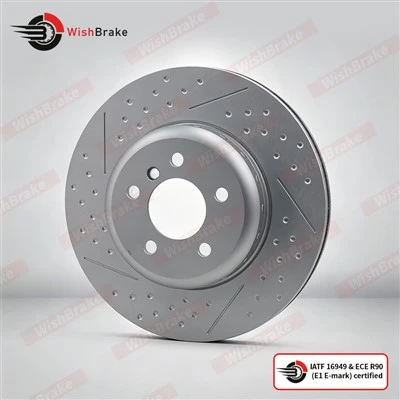
If you’re ready to upgrade, replace, or just learn more, reach out to our team to discuss your brake rotor needs for BMW. We’ll work with you to make sure you get a part that works as hard as your car, without the overheating headaches.
Brake Rotors By Materials References
- Automotive Brake Technology: Design, Testing, and Performance. SAE International, 2021.
- BMW Group Technical Manual: Brake System Design and Component Specifications, 2019.
- Friction Materials Standards Institute: Heat Transfer in Disc Brake Systems, 2020.
- Electric Vehicle Brake System Design Considerations. International Journal of Automotive Technology, Vol. 22, No. 3, 2021.
Qingdao Wish Auto Parts Co., Ltd.
Qingdao Wish Auto Parts Co., Ltd. is one of the most professional brake rotors for bmw manufacturers and suppliers in China. We are committed to providing high quality customized automotive brake discs with competitive price. Welcome to wholesale CE approved brake rotors for bmw in stock here and get quotation from our factory. 1 year warranty is available.
Address: No.45 Pengwan Road, Qingdao, Shandong Province, China
E-mail: SALES@wishbrake.com
WebSite: https://www.wishbrakeparts.com/
