If you’ve ever stood in your yard staring at a mountain of fallen branches, shrub trimmings, or old tree stumps, you know how draining it can be to dispose of waste manually. A wood chipper isn’t just a convenience tool—it’s a game-changer for anyone who works with wood: from homeowners managing their property, landscapers cleaning job sites, to farmers tending to large acreage. But here’s the thing: most people buy the first chipper they see, only to end up with a machine that’s too weak for their needs, or overkill that cost way more than necessary. As someone who’s spent 12 years in the wood chippers industry, helping hundreds of customers pick the right model, I’m here to break down exactly how to choose the one that fits your needs like a glove—no guesswork, no buyer’s remorse. Wood Chippers
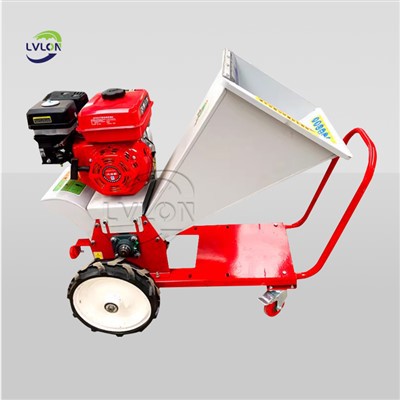
First, let’s start with the basics: what even is a wood chipper, and how is it different from a shredder or a mulcher? A wood chipper is designed to chew through large branches and whole logs, turning them into uniform wood chips—perfect for mulch, firewood kindling, or even biomass fuel. Mulchers and shredders, on the other hand, are made for small yard waste like leaves, twigs, and small plant debris, and they produce finer, more uneven material. Mix these up, and you’ll end up with a machine that either clogs every 10 minutes (a mulcher trying to handle a 4-inch branch) or wastes money on features you’ll never use (a chipper with a 10-inch capacity for a single homeowner with a ¼-acre yard). So the first step is to get clear on what you’re actually going to feed it.
The biggest mistake I see customers make is ignoring “capacity”—that’s the maximum diameter of wood the chipper can handle in one pass. This number makes or breaks your machine. If you’re a casual homeowner with a small backyard, mostly trimming small bushes and occasional 2 to 3-inch branches, a chipper with a 3 to 6-inch capacity will cover you. Landscapers who tackle job sites with 4 to 8-inch branches, and maybe the occasional 10-inch log? You’ll need a 6 to 10-inch model. Farmers or forestry workers dealing with large whole logs or thick tree trunks? A 10 to 18-inch heavy-duty industrial chipper is non-negotiable. I once had a customer who bought a 4-inch chipper because it was cheap, only to quit after two days when he tried to process a fallen oak branch that was 6 inches wide. It got stuck, burned out the motor, and he wasted $800 on a machine that was totally wrong for him. Don’t be that guy.
Next, power type—this boils down to three main options: electric, gas-powered, and hydraulic. Each has its own pros and cons, and picking the wrong one will cost you in convenience or performance. Let’s start with electric models, which are perfect for casual, low-volume use. There are two types of electric: corded and battery-powered. Corded electric chippers are quieter, cheaper, and require almost no maintenance—no oil changes, no gas to mix. But they have a huge drawback: the cord limits your range. If you’re processing branches that are far from your home’s power outlet, you’ll either be tripping over a 100-foot extension cord (which is a safety hazard) or not working at all. Battery-powered electric chippers are cordless, so you can move them anywhere. They’re even quieter than corded ones, great for noise-sensitive neighborhoods. But their downside is runtime: most small batteries will only last 30 to 60 minutes of heavy use, and you’ll need to buy extra batteries if you have a full day of work. For homeowners who only use their chipper a few times a month, a battery-powered 3 to 4-inch electric chipper is ideal.
Gas-powered chippers are the workhorses of the bunch, and the most popular choice for most people. They come in two categories: engine size (measured in horsepower, or HP, for gas models) and type: single-stage or dual-stage. Single-stage gas chippers are for light to medium use: they feed wood directly into the cutting blades, which spin at high speeds to chip the material. They’re cheaper, lighter, and easy to maneuver. A 5 to 10 HP single-stage chipper will handle 3 to 6-inch branches, perfect for regular landscapers or homeowners with medium yards. Dual-stage gas chippers, also called “commercial-grade,” are made for heavy-duty work. First, a set of feed rollers pulls the wood into the machine, then sharp blades chip it. This design is way less likely to clog, can handle larger branches (up to 10 inches), and produces more uniform chips. If you’re running a landscaping business or processing large amounts of wood weekly, a 10 to 15 HP dual-stage chipper is the way to go. The only downsides of gas models are noise, emissions (most places have noise ordinances, so check your local rules), and maintenance: you have to change the oil, replace spark plugs, and mix gas with oil for 2-stroke engines. But for power and portability, nothing beats a good gas chipper.
Hydraulic chippers are the heavy hitters, reserved for industrial or large-scale use. They use hydraulic pressure to feed wood into the blades, so they can handle logs up to 18 inches thick, process hundreds of pounds of wood per hour, and run for days without stopping. These are what forestry companies or large farms use. But they’re extremely expensive (often $10,000 or more) and way overkill for anyone but commercial operators. Unless you’re running a full-time wood processing business, you can skip hydraulic.
Once you’ve got capacity and power type down, look at features that make your machine usable and durable. First, feed hopper size. The hopper is where you put the wood, and a larger hopper means you can load bigger pieces without cutting them first. For example, a small electric chipper might have a 12-inch hopper, meaning you have to cut a 5-inch branch into two 6-inch pieces to fit. A larger gas chipper with an 18-inch hopper can take a whole 10-inch log, saving you time. Then there’s the collection system. Most chippers have a chip chute that blows chips into a collection bag or bin, but some have optional chutes that can be rotated, or even reverse, so you can direct chips away from yourself or obstacles. If you’re using chips for mulch in your garden, a bag that attaches to the chute will save you from sweeping up piles all over your yard. If you’re hauling chips, a model that lets you attach a bin to the back is better.
Durability is another big one. Chippers have moving blades that take a beating, so look for features like heavy-duty steel construction (avoid any models with plastic housings—they’ll break after a few uses), reversible blades (some models let you flip the blade instead of replacing it when it dulls, saving you money), and warranty. A good warranty should cover at least 2 years on parts and labor for consumer models, and 5 years for commercial ones. I’ve seen cheap no-name chippers fall apart after a season, while a reputable brand’s chipper can last 10 years with regular maintenance.
Maneuverability is easy to overlook, but if you have to move your chipper around your yard or job site, it matters. Small electric chippers are lightweight (under 50 pounds) and have wheels, so you can lift them easily. Medium gas chippers usually have 8 to 12-inch wheels, some even have a towable hitch, so you can pull them behind a lawnmower or ATV. Industrial chippers are heavy, but they’re meant to stay on a job site, so maneuverability isn’t a concern there. Just make sure you check the weight and wheel size before buying—if you have to carry your chipper up steps, a 150-pound model won’t work for you.
Don’t forget about maintenance requirements. Even the best chipper will break if you don’t take care of it. Electric chippers need their blades sharpened once a year, and the cord (if corded) checked for fraying. Gas chippers need oil changes every 50 hours, spark plug replacements, and air filter cleans. A dual-stage chipper needs the feed rollers lubricated regularly. Before you buy, ask yourself: do you have time to do this maintenance? If you’re a busy homeowner, a low-maintenance electric model with few moving parts might be better than a high-maintenance commercial gas chipper, even if it’s a bit more expensive.
Now, let’s put this all together with examples, so you can match your needs to a specific model. If you’re a homeowner with a ¼-acre yard, trimming small bushes and a few branches a month, a 3-inch cordless electric chipper is perfect. It’s quiet, no gas hassle, lightweight, and cheap (usually $200-$500). If you’re a homeowner with a 1-acre yard, or a part-time landscaper doing small jobs, a 6-inch single-stage gas chipper, around 8 HP, is ideal. It can handle 6-inch branches, has enough power to process a fallen tree every few months, and costs $800-$1,500. If you’re a full-time landscaper doing multiple jobs a week, a 10-inch dual-stage gas chipper, 12 HP, will process 500 pounds of wood an hour, handle thick branches, and cost $2,000-$4,000. If you’re a farmer processing orchard waste or a small forestry operation, a 14-inch heavy-duty dual-stage chipper, around 15 HP, is what you need, priced at $5,000-$8,000.
I want to share a quick story that illustrates why this process works. Last year, a landscaper named Mike came to me panicking, saying his old chipper had died mid-job and he needed a replacement fast. He’d been using a cheap 5-inch single-stage gas chipper for two years, and had just landed a contract to clear a large subdivision lot with 8-inch branches. I showed him that his old model was too small, and helped him pick a 10-inch dual-stage model, which could process 8-inch branches in one pass. He finished the job two days early, and told me he saved $1,200 in labor because he didn’t have to cut every log in half before feeding it. That’s the kind of win that comes from choosing the right machine, not just the cheapest one.
At the end of the day, the best wood chipper is the one that matches your specific use case. You don’t need a commercial-grade dual-stage chipper if you only use it once a month, and you definitely shouldn’t buy a tiny electric model if you’re running a landscaping business. If you’re still unsure which model fits your needs, or want to compare options for your volume of wood, feel free to reach out to our team for a personalized consultation. We can walk you through capacity, power, and feature options, and make sure you get a machine that works as hard as you do.
When you invest in a wood chipper, you’re not just buying a tool—you’re investing in time saved, less waste, and a easier way to keep your property or job site clean. Take the time to figure out your needs first, and you’ll have a machine that will pay for itself in no time.
Grain Threshing References
- Wood Industry Buyers Guide. (2022). Wood Chipper Capacity and Power Specifications for Residential and Commercial Use.
- American National Standards Institute. (2021). Safety Standards for Wood Chippers and Yard Waste Equipment.
- Landscape Management Magazine. (2023). Best Practices for Choosing a Wood Chipper for Small to Medium Landscaping Operations.
- U.S. Environmental Protection Agency. (2022). Emission Standards for Small Engine Power Equipment, Including Gas-Powered Wood Chippers.
- Farm Journal. (2021). Heavy-Duty Wood Chippers: Selection and Maintenance for Agricultural Applications.
Henan Lvlon Industrial Co., Ltd.
We’re well-known as one of the leading wood chipper suppliers in China, featured by quality products and good price. Please rest assured to buy high-grade wood chipper for sale here from our factory. Welcome to view our website for more information.
Address: Unit 5, 5th Floor, Building 11, No. 18 Dongfeng Road, Jinshui District, Zhengzhou City, Henan Province.
E-mail: lvlonxu@gmail.com
WebSite: https://www.lvlonmachinery.com/
