As an industrial fasteners supplier, I talk to folks in manufacturing, construction, and aerospace every single day, and one question pops up more often than you’d think: “Why do these fasteners matter so much?” Sure, a bolt or a nut might seem like a tiny, unglamorous part, but let me tell you—their tolerances? That’s where the real story lives, and skip on getting that right? That’s a fast track to headaches, breakdowns, and even safety risks. If you’re not clued in on how manufacturing tolerances shape every fastener that leaves your supplier’s warehouse, you’re setting yourself up for way more trouble than you’d ever guess. Industrial Fasteners

First, let’s break down what “manufacturing tolerance” actually means, in plain speak. When we make a bolt, the design calls for a specific diameter, thread pitch, and length, right? Tolerance is the tiny wiggle room that manufacturers allow for a little natural variation during production. It’s not a flaw—it’s a practical way to make sure parts fit together without breaking the bank. But here’s the thing: tolerances aren’t one-size-fits-all. A tolerance that works for a random bolt holding a shelf in a garage? That totally fails for a high-stress bracket on a commercial airplane. I see this mix-up all the time, and it’s why so many people reach out confused because their fasteners just don’t work like they thought they would.
Let’s start with the most obvious impact: fit. I can’t tell you how many times a customer has come to me saying, “Your M10 bolts don’t line up with my mounting holes” or “My nut won’t thread on right.” More often than not, that’s not a defect—it’s tolerance mismatch. If a bolt’s thread diameter is measured at 10.0mm, but the tolerance says it can be off by +0.1mm, and the nut’s thread diameter is supposed to be 10.0mm with a -0.1mm tolerance, those two parts won’t fit at all. They’re just slightly out of sync, and if you try forcing them? You’ll strip the threads, crack the fastener, or end up with a loose joint. For low-stuff stuff, this is an annoying hassle—you send parts back, wait for replacements, fall behind on a project. But in heavy machinery, like a construction crane’s boom? A bad fit means the bolt could work its way loose over time, and that’s a disaster waiting to happen. I had a customer last year who tried switching to a cheaper fastener supply without checking tolerances, and they ended up scrapping a whole batch of gearboxes because the bolts wouldn’t seat properly. That cost them way more than saving a few bucks on fasteners ever would.
Next up, load capacity. That’s the big one for anyone dealing with industrial fasteners. Every bolt, screw, or nut is engineered to handle a specific amount of tension or shear force, and tolerances directly affect how much that load can take. Let’s use a hex bolt as an example. If a bolt’s shank diameter is made to be on the smaller end of its tolerance range, it might bend or snap way below the rated load. If it’s on the larger end, it might not fit the hole, like we talked about earlier, but if it does fit, it could actually distribute weight unevenly? Wait, no—let me clarify: a bolt’s cross-sectional area is what determines its tensile strength. If the tolerance for diameter is off, the cross-sectional area changes, which changes how much force the bolt can handle. A bolt with a 0.2mm smaller diameter than designed might have 10% less strength, which doesn’t sound like much, but when you’re talking about a part that’s holding 10,000 pounds? That’s the difference between a safe joint and a failure. I saw a construction accident a couple years back where a steel beam bolt failed, and the investigation traced it back to a batch of bolts that were made with looser tolerances than they should’ve been. It wasn’t a “bad” bolt—it just didn’t meet the required load specs because of tolerance drift. That’s why we don’t cut corners on tolerance checks here; we do 100% inspection on critical fasteners because the risk just isn’t worth it.
Then there’s corrosion resistance. Wait, you might not connect that to tolerances, but hear me out. Fasteners with tight, precise tolerances have smoother surfaces and tighter thread engagements, right? Looser tolerances can leave tiny gaps between the threads, or rough edges where manufacturing left burrs. Those gaps trap moisture, dirt, and chemicals—stuff that causes rust or corrosion. For industries like marine manufacturing or chemical processing plants, corrosion is a huge deal. A corroded bolt might lose half its strength in a few years, and again, that leads to failure. I had a food processing plant customer who had to replace all their conveyor bolts every six months because they were using low-tolerance bolts that trapped cleaning chemicals in the threads. Switching to our high-tolerance, smooth-threaded fasteners cut their replacement time down to every two years. That saved them thousands in labor and downtime, just from getting tolerances right.
Downtime is another big, often overlooked impact. If your production line relies on fasteners that fit perfectly every time, a tolerance mismatch means line stops, rework, delays. Let’s say you’re making 500 car parts a day, and you need a specific bolt to mount the engine. If a batch of bolts is off-tolerance, you can’t assemble the parts, so you’re not only not shipping—you’re paying workers to stand around, rent on the factory space, all that overhead. I work with a lot of automotive manufacturers, and their number one priority on fasteners is consistent tolerances. They can’t afford even an hour of downtime, so they lock in our supply because we deliver bolts that hit the tolerance mark every single time. Cheaper suppliers might get lucky some days, but if tolerances vary, you’re gambling with your schedule.
Wait, let’s talk about thread engagement, too— that’s the number of threads that go into a nut or part, and it’s totally dependent on tolerance. If a bolt’s length is off because of tolerance, you might not have enough threads engaged, which means the joint is way weaker than it should be. Too short, and the nut can only bite a few threads; too long, and it might protrude, or not seat right on the part. For example, a high-tensile bolt used in a wind turbine’s blade mount needs at least 6x the thread diameter in engagement to hold the blade up. If a bolt’s length is 0.5mm shorter than its tolerance allows, you could end up with only 5x engagement, which cuts the load capacity by almost a third. Wind turbines are out in remote areas, and replacing a blade mount bolt is way more expensive than using a tolerance-compliant fastener in the first place. That’s why we work with our clients to specify the exact tolerance they need for their application—no guesswork, no cutting corners.
Now, let’s get into standardization vs. custom tolerances. A lot of people think all fasteners use the same tolerance, but that’s not true. International standards like ISO, ANSI, or DIN set base tolerances, but custom applications—like a space satellite’s fasteners, or a medical device’s tiny screws—need way tighter tolerances. Satellites are in space, where thermal expansion and contraction can warp parts, so fasteners have to be made with extremely tight tolerances to handle that movement without loosening. Medical devices, like a pacemaker’s housing, need fasteners that fit perfectly so there’s no risk of tiny particles breaking loose inside the body. I don’t work with too many space or medical clients, but when I do, they’re laser-focused on tolerance consistency. A lot of new suppliers don’t realize that tolerances aren’t just a number—they’re tailored to what the fastener is holding together.
I’ve also seen the flip side: someone using a tolerance that’s too tight. That sounds like a good thing, right? But it can cause its own problems. Tighter tolerances mean the manufacturer has to spend more time and resources on inspection and machining, which makes the fastener more expensive. If a customer uses a tolerance that’s way tighter than their application needs, they’re wasting money. For example, a DIY carpenter using a bolt to hang a shelf doesn’t need a tolerance of ±0.01mm; ±0.05mm works just fine, and it’s half the cost. As a supplier, we try to educate our clients on that—we don’t just sell them whatever they ask for; we ask them what the application is, how much load it’ll take, the environment, and recommend the right tolerance. That’s part of the service, right? It’s not just shipping a box of bolts—it’s making sure those bolts work for their exact job.
Another thing: tolerance drift. That’s when a manufacturer’s production line starts making fasteners slightly outside the specified tolerance over time. Maybe a tool wears down, or a calibration sensor goes out of whack, and no one catches it. That’s why quality control is non-negotiable. I had a supplier partner a few years ago who was a big fastener maker, but they cut corners on their QC, and tolerance drift led to a batch of bolts that were too weak. They lost three major clients in a month, and it took them two years to get their reputation back. Now, for our own fasteners, we do daily calibration checks, random sampling, and 100% inspection on any fastener that’s holding a critical structure. It’s tedious, but it’s how we keep our clients coming back.
Let me wrap this up by putting it all in perspective. Industrial fasteners are the unsung heroes of every industry—they hold buildings up, keep cars on the road, let planes fly. Their manufacturing tolerances aren’t just a technical detail; they’re the difference between a project that runs smoothly, safely, and on budget, and one that’s plagued by delays, failures, and costs you never saw coming. Whether you’re a small construction company needing bolts for a job site, a factory making heavy machinery, or an aerospace team building a satellite, getting tolerances right isn’t optional. It’s essential.
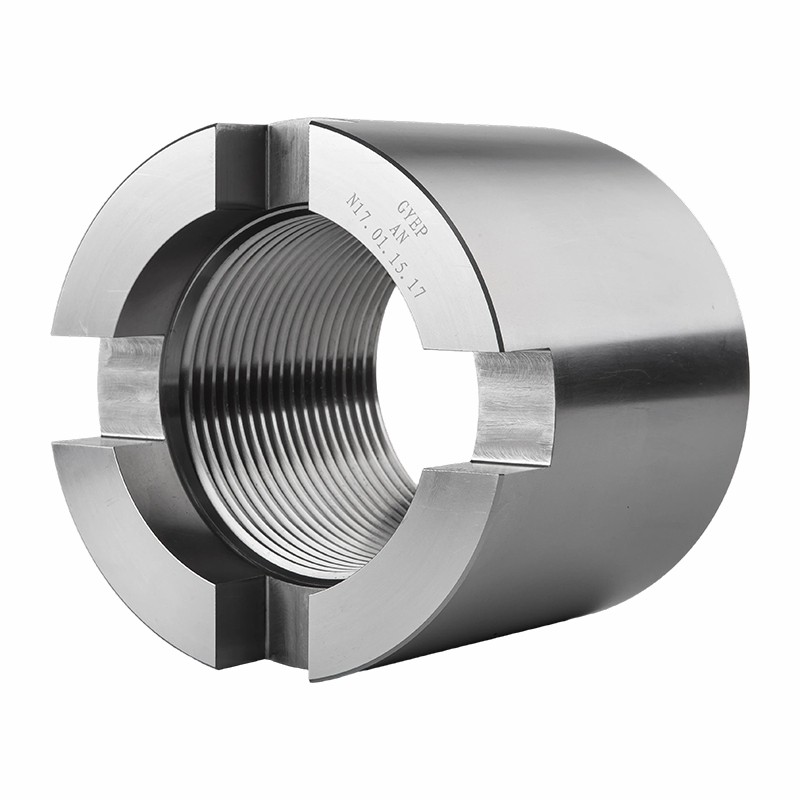
If you’re dealing with fasteners that don’t fit, keep breaking, or costing you way more in downtime than they should, hit me up. I’ve worked with every type of industrial fastener, and I can help you figure out the right tolerance specs for your application, so your projects run without a hitch. No jargon, no gimmicks—just straight talk about fasteners that work. You can reach out to start a conversation about your specific needs, and we’ll find a solution that fits.
Turbine Diaphragm References:
- ISO 965-1:2018, "ISO general purpose metric screw threads — Tolerances — Part 1: Principles and basic data"
- ANSI/ASME B1.13M-2019, "Metric Units for Unified Inch Screw Threads (UN and UNR Thread Form)"
- Shigley, J. E., Mischke, C. R., & Budynas, R. G. (2020). Mechanical Engineering Design, 11th Ed. McGraw-Hill Education.
- "The Impact of Fastener Tolerances on Structural Integrity" – Journal of Industrial Manufacturing and Fastener Technology, Vol. 17, No. 2, 2022.
- Marine Fastener Standards: NACE SP0176-2020, "Corrosion Control of Steel Fasteners Used in Marine Applications"
Hebei Guoyuan Electric Co., Ltd.
Address: No. 18 Tianshan Science and Technology Industrial Park, No. 319 Xiangjiang Road, Shijiazhuang High-tech Zone, Hebei Province, China
E-mail: turbine@goineep.com
WebSite: https://www.goineep.com/
